
Sommieria leucophylla
Sommieria leucophylla
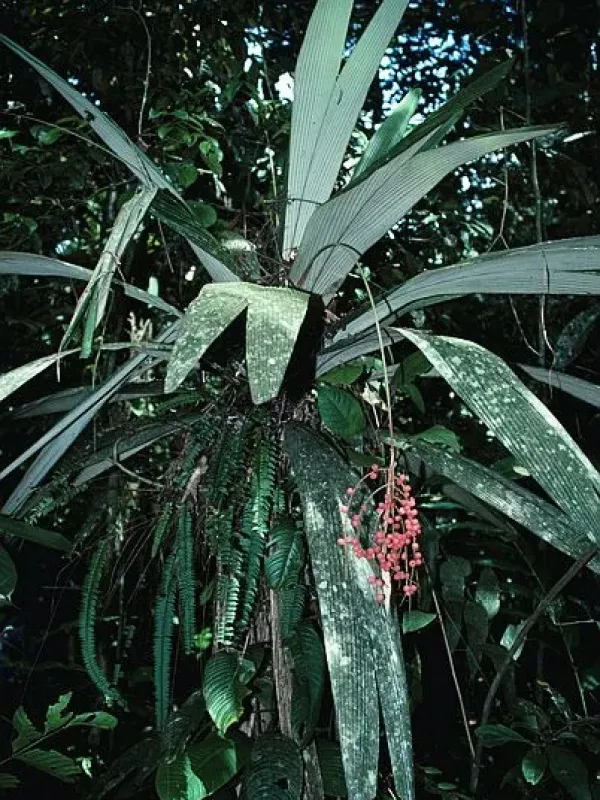
Description
Growing requirements
Sommieria leucophylla is an elegant, single-stemmed palm belonging to the Arecaceae family, native to the tropical rainforests of New Guinea. In agricultural and horticultural practices, it is treated as a high-value ornamental crop for specialized tropical conservatories.
The crop requires a stable, high-humidity environment, ideally maintaining levels between 80% and 90%. Temperature requirements are strictly tropical, necessitating a range of +22°C to +28°C throughout the production cycle to avoid physiological stress.
Cultivation substrates must be loose, acidic, and highly porous to ensure efficient drainage. A mixture composed of high-quality peat, perlite, and decomposed forest mulch provides the structural integrity necessary for healthy root development.
Light management is crucial, as the species is adapted to the deep shade of the forest floor. Direct solar exposure causes rapid tissue necrosis and leaf burning, therefore, cultivation under 60-70% shade cloth is mandatory for canopy protection.
Irrigation must be precise, utilizing tempered water to keep the root zone consistently moist but not saturated. Over-irrigation is the most common cause of failure in the production of this species, requiring a balanced approach to water management.
Main diseases and pests
Root rot, primarily caused by Pythium or Phytophthora species, represents the most significant threat to this palm. It is almost exclusively associated with improper drainage and anaerobic conditions in the substrate mix.
Spider mites are common pests in low-humidity conditions, capable of causing extensive damage to the foliage. Integrated pest management strategies, including the use of beneficial mites, are recommended for large-scale production.
Scale insects and mealybugs can infest the leaf axils, depleting the plant's resources. Regular inspection and localized application of horticultural oils or systemic insecticides are standard procedures for maintaining plant health.
Bacterial leaf spot can develop in environments with stagnant air and condensation on the leaves. Enhancing ventilation systems is essential to mitigate these biological risks during cooler or more humid seasons.
Maintaining a strict sanitary protocol during all stages of cultivation, from propagation to maturity, is the best defense against persistent pests and endemic soil pathogens that affect sensitive palms.