
Socratea exorrhiza
Socratea exorrhiza
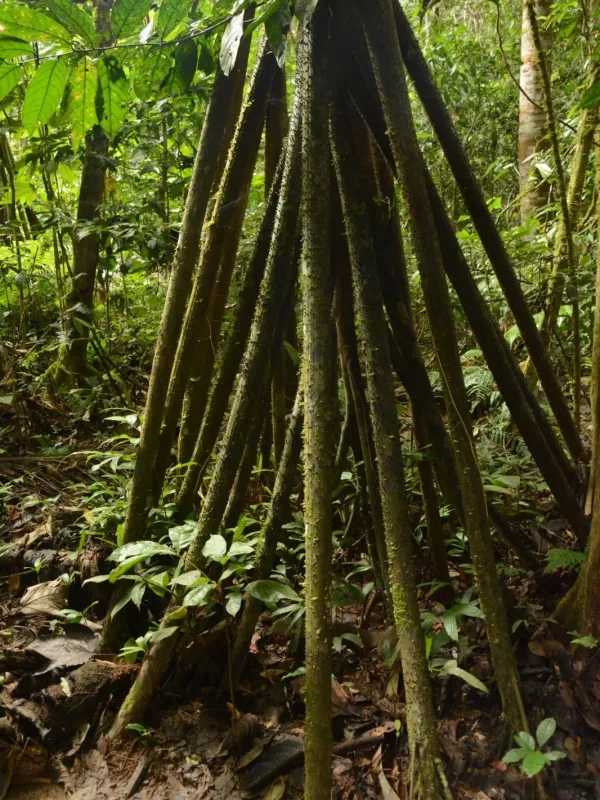
Description
Growing requirements
Socratea exorrhiza, commonly referred to as the walking palm, is a member of the Arecaceae family. This species is native to tropical rainforests in Central and South America, where it thrives under the canopy of dense forest ecosystems.
The plant requires a humid, tropical environment with consistent temperatures year-round. It prefers deep, nutrient-rich soils that provide enough moisture without becoming waterlogged, which is essential for the healthy development of its specialized root structure.
Botanically, the most striking feature is its stilt-like roots. These roots grow above the ground, anchoring the tree firmly in the soft soil of the rainforest floor, which helps the palm withstand strong winds and unstable terrain.
Climate requirements include high rainfall and minimal temperature fluctuations. Socratea exorrhiza cannot tolerate frost or arid conditions, making it strictly a tropical plant that relies on the stable microclimate provided by the rainforest canopy.
Cultivation of this species outside its natural range is extremely challenging. It requires precise control over humidity, soil quality, and light intensity. Growers must ensure the plant is protected from direct, harsh sunlight to prevent foliage damage.
Harvesting
Economic use of the walking palm is localized. Indigenous communities traditionally utilize the strong, fibrous trunk wood for structural purposes, including house framing and the construction of various hunting and agricultural implements.
Harvesting practices are generally small-scale and sustainable. Due to the slow growth rate of the palm, widespread commercial logging is not economically viable, which inadvertently helps in preserving the species in its natural habitat.
The fruits of the Socratea exorrhiza serve as a significant food source for local wildlife, particularly birds and small mammals. This mutualistic relationship is vital for seed dispersal, ensuring the continued survival of the species within the ecosystem.
While not a major commercial crop, the plant remains a subject of botanical interest. Researchers study its root development and structural integrity to better understand how plants adapt to precarious tropical soil conditions.
Sustainability is the primary concern regarding the use of this palm. Conservation efforts focus on protecting rainforest regions where Socratea exorrhiza grows, ensuring that its vital role in the ecosystem remains intact for future generations.