
Korthalsia echinometra
Korthalsia echinometra
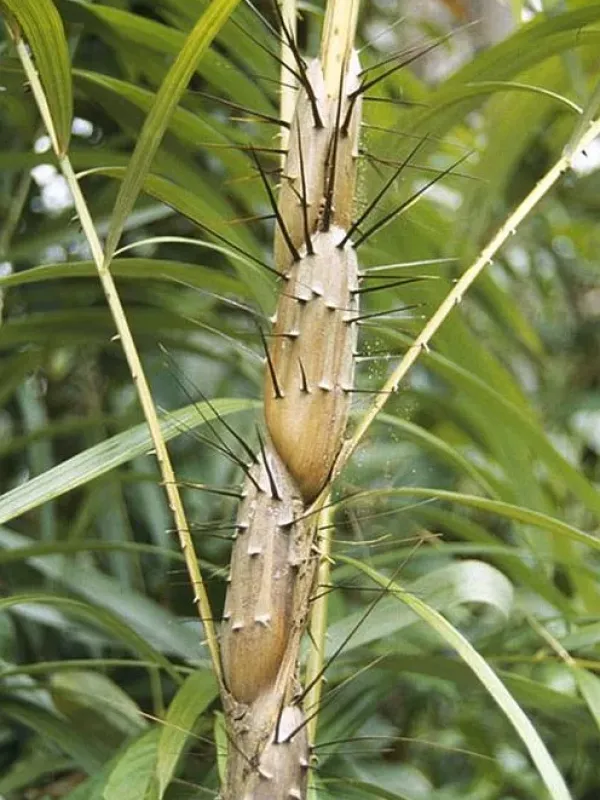
Description
Sowing dates
Propagation of Korthalsia echinometra primarily occurs through seeds in natural settings, often aided by wildlife. In agricultural production, using fresh seeds is critical due to their short viability period.
Seeds must be stripped of the fleshy pericarp, which contains irritant calcium oxalate crystals, before planting. Once cleaned, seeds are sown in nursery beds with high moisture levels.
Germination typically requires a consistent temperature of 25–30 degrees Celsius. Maintaining high humidity is essential during this phase to ensure a successful sprouting rate.
Seedlings are transplanted to their permanent location once they develop three to four true leaves. This transition period is delicate and requires careful handling of the root system.
Commercial plantations are often established in shaded forest areas or transition zones, providing the ideal microclimate for the young palm to establish its initial growth.
Growing requirements
Korthalsia echinometra is a climbing rattan palm belonging to the Arecaceae family. It is strictly adapted to tropical environments with abundant rainfall throughout the year.
The plant thrives in well-drained but consistently moist soils rich in organic matter. It is highly intolerant of drought conditions, which can lead to brittle and low-quality canes.
As a climbing species, it requires trees or support structures to reach maturity. Without adequate support, the stem growth becomes distorted, significantly reducing its commercial value.
The species prefers the warm, humid conditions of lowland tropical forests. High ambient humidity is crucial for maintaining the flexibility and resilience of the canes.
Light management is important; while the palm needs light to grow, it thrives under the dappled sunlight provided by a forest canopy, which prevents heat stress on the leaves.
Yield
The yield of Korthalsia echinometra is measured by the length and quality of the canes harvested. Mature canes are typically ready for harvest between 7 and 10 years of age.
Sustainable plantation management involves selective harvesting, allowing the root clumps to remain productive for successive cycles of stem growth over many years.
Yields are heavily influenced by site fertility and the density of support structures available. Proper maintenance of the site ensures that the plants reach their maximum growth potential.
Marketable yield depends on cane diameter and surface quality. Careful harvesting practices reduce damage to the remaining plants, ensuring long-term plantation productivity.
Efficiency in collection and post-harvest handling is vital, as the length and weight of raw canes make transportation from remote forest areas a logistical challenge.
Main diseases and pests
Fungal diseases pose a major threat, particularly in areas with poor airflow and excessive soil moisture, leading to root rot and base decay.
Insect pests, including various boring beetles, are a significant danger as they can penetrate the stem, creating tunnels that degrade the structural integrity of the rattan.
Large mammals such as wild pigs and rodents frequently feed on young shoots and buds, which can severely stunt or kill individual plants within a plantation.
Deforestation and habitat loss are the primary external threats, as the plant relies on the complexity of the forest ecosystem to maintain its health and natural growth cycles.
- Root and stem fungal rots.
- Wood-boring insect infestations.
- Grazing pressure from wild mammals.
- Competition from aggressive invasive weeds.
- Physical stem damage during harvesting operations.
Harvesting
Harvesting involves cutting the mature stems at the base using sharp tools like machetes. Harvesters must be careful to leave the rootstock intact to ensure regeneration.
Once harvested, the thorny scales and remaining foliage must be stripped from the cane. This primary processing stage is crucial for preparing the raw material for storage.
Canes are then sorted by diameter, length, and quality. They are bundled and allowed to sun-dry, which stabilizes the wood and prevents mold and fungal growth.
Boiling in oil is a common traditional treatment for Korthalsia echinometra. This process improves the cane's flexibility, imparts a rich color, and protects it from future insect damage.
The final product is graded for the international furniture market, where it is prized for its strength, durability, and unique aesthetic characteristics in weaving and design.