
Johannesteijsmannia
Johannesteijsmannia
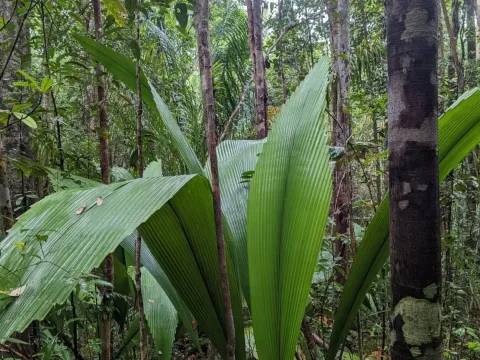
Johannesteijsmannia is a genus of distinct, slow-growing palms belonging to the Arecaceae family, native to the tropical rainforests of Southeast Asia. Often referred to as "diamond palms" due to their unique, almost undivided diamond-shaped leaves, they are highly prized by collectors for their sculptural foliage.
What the section contains


Johannesteijsmannia
The cultural requirements for this plant focus heavily on high humidity and stable, warm temperatures throughout the year. In their native habitats of Malaysia and Indonesia, these palms thrive in the understory of dense forests, where they are shielded from direct sunlight by the canopy.
Optimal growth requires a specialized, well-draining soil mix that remains moist but never waterlogged. Incorporating organic matter such as peat or coco coir into the substrate is recommended to mimic the nutrient-rich forest floor where these palms naturally establish their root systems.
Environmental conditions must be kept consistent, with temperatures ideally ranging between 22 and 28 degrees Celsius. Any sudden exposure to dry air or cold drafts will result in rapid browning and irreversible damage to the architectural leaf blades, which take a long time to emerge and mature.
Maintenance involves frequent misting or the use of humidifiers to maintain ambient humidity levels above 70 percent. As a slow-growing species, Johannesteijsmannia does not require heavy fertilizing; a dilute balanced liquid fertilizer applied during the summer months is sufficient to support healthy foliage development.
The primary horticultural threats include root rot caused by poor drainage and fungal pathogens that thrive in stagnant, humid environments without adequate air circulation.
Pest management is focused on preventing infestations of spider mites, scale insects, and mealybugs, which are often attracted to the plant when humidity levels drop below the required threshold or when the plant is stressed.