
Barrigona
Colpothrinax wrightii
Description
Growing requirements
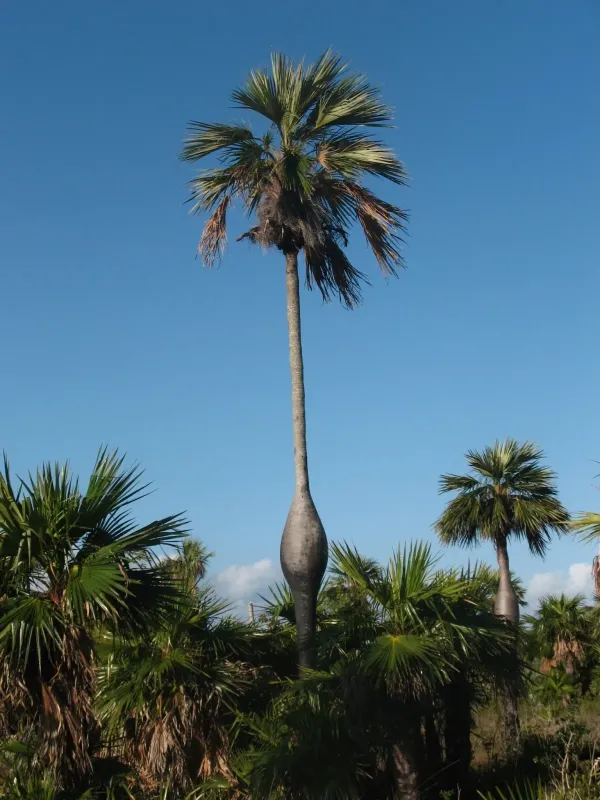
The Barrigona (Colpothrinax wrightii) is a distinctive member of the Arecaceae family, endemic to Cuba. It is widely recognized for its unique, barrel-shaped trunk, which features a prominent central swelling that sets it apart from most other palm species.
Originating from Cuba, this palm thrives in open, sandy habitats where nutrient levels are naturally low. It is highly adapted to a tropical environment characterized by high humidity and consistent warmth, rarely experiencing significant fluctuations in temperature.
When cultivating this species, mimicking its natural environment is essential. It requires full sun exposure and a well-draining soil medium, such as sandy loam or a specialized cactus and palm mix. Water retention in the root zone is a common cause of failure in cultivation.
Temperature requirements are strict, as the plant does not tolerate frost or cold drafts. Ideally, the ambient temperature should remain well above 15°C throughout the year, with optimal development occurring at temperatures exceeding 25°C.
In terms of agricultural or ornamental use, Barrigona is primarily valued for its architectural appearance. It is a slow-growing palm that requires minimal pruning, mostly focused on the removal of dead fronds to maintain the cleanliness and health of the trunk.
Main diseases and pests
Root rot is the primary threat to Colpothrinax wrightii, typically triggered by overwatering or poor drainage systems. Once the root system is compromised by fungal pathogens, recovery is extremely difficult due to the slow metabolic rate of the palm.
Insect pests, such as scales and mealybugs, represent a secondary threat. These insects often hide in the dense crown of the palm, sucking sap from the young, tender leaves and potentially spreading viral infections between plants.
Physical trauma to the trunk can also lead to secondary infections. Because the stem of the Barrigona contains sensitive vascular tissue within its swollen structure, any deep cuts or bruises can become entry points for harmful bacteria or fungi.
To prevent these issues, growers should prioritize airflow and moderate fertilization. Avoiding excessive high-nitrogen fertilizers is crucial, as they can cause rapid, weak growth that makes the plant more susceptible to both pests and structural weakness.
Integrated pest management, including regular manual inspection of the leaf bases and the use of horticultural oils, is the most effective approach for maintaining healthy specimens in greenhouse or garden conditions.