
Asiatic jasmine
Trachelospermum asiaticum Nakai
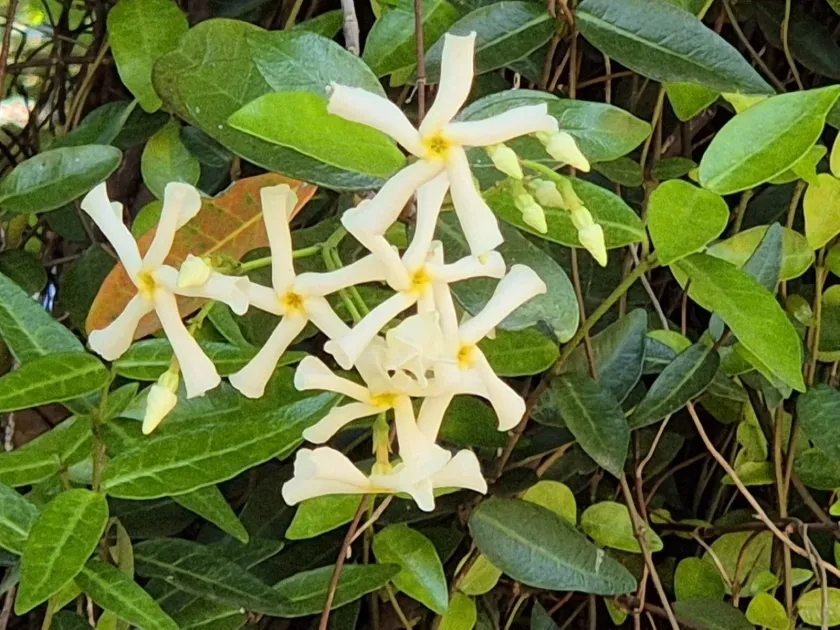
Description
Growing requirements
Trachelospermum asiaticum, commonly known as Asiatic jasmine, belongs to the Apocynaceae family. It is a vigorous, evergreen woody climber widely appreciated for its dense foliage and fragrant flowers.
Native to Eastern Asia, including Japan and Korea, this plant is well-suited for various landscapes. While it prefers warmer climates, it exhibits moderate cold tolerance, allowing it to survive in temperate regions.
This species thrives in a range of light conditions, from full sun to partial shade. However, optimal flowering is achieved when the plant is positioned in a spot that receives ample sunlight during the day.
Regarding soil, Trachelospermum asiaticum requires fertile, well-draining soil. It is tolerant of various soil textures, but waterlogged conditions should be strictly avoided to prevent root rot issues.
Maintenance involves regular watering during dry spells and light pruning. Pruning is typically performed in late spring to maintain the desired shape and to remove any dead or damaged wood from the previous season.
Main diseases and pests
Asiatic jasmine is relatively pest and disease-free. However, environmental stress, particularly excessive moisture, can predispose the plant to fungal infections affecting the root system.
Common pests include spider mites and scale insects. These are more likely to occur if the plant is grown under drought stress or in poorly ventilated environments with low humidity.
Monitoring the undersides of the leaves is critical for early detection of pest infestations. Timely intervention with insecticidal soaps or horticultural oils is usually effective in controlling these issues.
Good cultural practices, such as proper spacing and keeping the foliage dry, significantly reduce the risk of common fungal pathogens that might affect the leaves.
For container-grown specimens, ensuring that the pot has adequate drainage holes is essential to prevent the buildup of stagnant water, which remains the primary threat to the health of the plant.