
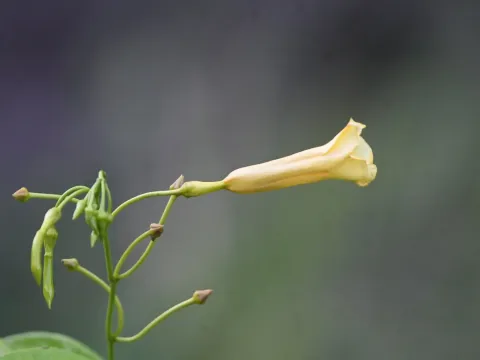
Pentalinon
Pentalinon
Pentalinon, commonly known as yellow dipladenia, is a genus of flowering plants in the family Apocynaceae. Native to the Caribbean and Central America, this evergreen woody vine is prized for its bright, trumpet-shaped yellow flowers.
What the section contains

Pentalinon
The plant thrives in tropical and subtropical climates, requiring temperatures between 20°C and 28°C. It is frost-sensitive and should be kept in protected conditions or containers in cooler regions to prevent damage from low temperatures.
Cultivation requires well-drained, nutrient-rich soil with an acidic to neutral pH. A mix containing peat moss, pine bark, and perlite ensures sufficient aeration and prevents the waterlogging that often leads to root issues.
Pentalinon demands high light intensity to sustain its vigorous growth and abundant blooming. While it appreciates bright light, protection from intense mid-day sun in extremely hot climates is recommended to avoid leaf scorch.
Watering management is crucial during the active growing season. The substrate should be kept consistently moist but never soggy, allowing the top layer to dry out slightly between waterings to encourage healthy root development.
Spider mites are the most significant pests for Pentalinon, especially in environments where humidity levels are consistently low, leading to yellowing and webbing on the foliage.
Mealybugs can also infest the stems and leaf axils, sucking the plant's sap and excreting honeydew, which may subsequently attract secondary fungal infections or sooty mold.
Root rot caused by Phytophthora or other fungi is a common threat triggered by poor drainage or overwatering, often resulting in the rapid collapse of the plant structure.
Regular inspection of the undersides of leaves and sanitation practices, such as removing dead organic matter from the soil surface, are essential for maintaining plant health.
Growers should handle the plant with care, wearing gloves during pruning, as Pentalinon contains a milky, toxic latex that can cause severe skin irritation upon contact.