
Pachypodium succulentum
Pachypodium succulentum
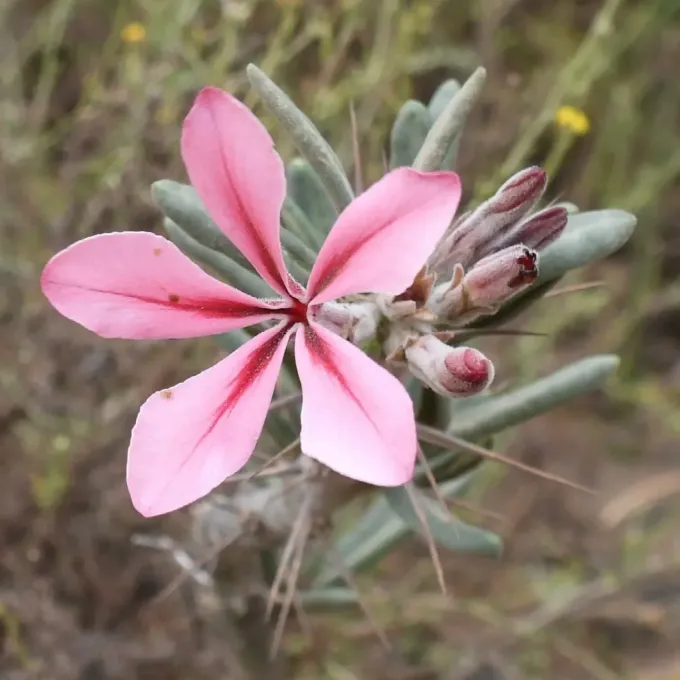
Description
Growing requirements
Pachypodium succulentum is a distinct species within the Apocynaceae family. This succulent plant is characterized by its tuberous, thickened stem, known as a caudex, which acts as a vital water storage organ.
Native to the arid regions of the Cape Province in South Africa, this species is well-adapted to extreme thermal fluctuations and limited precipitation. In agricultural settings, it requires conditions that mimic its natural habitat.
The culture thrives under high-intensity light. Providing full sun exposure is essential for maintaining the compact growth habit of the plant and promoting healthy, robust development of the succulent stem.
Soil requirements focus on drainage and aeration. A porous mix consisting of coarse sand, perlite, and a small portion of organic soil is necessary to prevent water retention and ensure healthy root respiration.
During the active growing season, moderate watering is required only after the substrate has completely dried. As the plant enters dormancy in winter, watering should be reduced significantly or stopped entirely to prevent rot.
Main diseases and pests
The most critical physiological threat to Pachypodium succulentum is root rot caused by poor drainage. Excess moisture in the root zone quickly leads to the decay of the caudex, which is often irreversible.
Common pests include the two-spotted spider mite, which thrives in warm, dry environments. These pests can cause significant damage to the leaf tissue, requiring timely application of appropriate miticides.
Mealybugs are another prevalent concern. These insects usually hide in the crevices of the stem or at the base of the leaves. Manual removal combined with systemic insecticides is the standard control protocol.
Fungal infections can appear as dark, soft spots on the plant body. These are often indicators of high humidity levels combined with poor airflow, necessitating immediate improvement in ventilation.
To ensure long-term health, growers must maintain a sterile environment during propagation or repotting. Using contaminated tools or soil can easily introduce pathogens that exploit the plant's succulent tissues.