
Pachypodium rutenbergianum
Pachypodium rutenbergianum
Description
Growing requirements
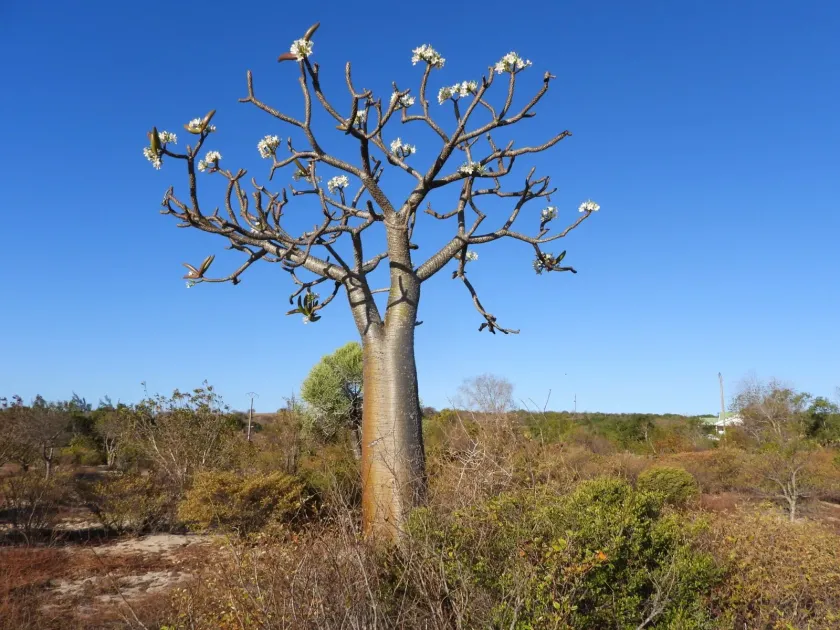
Pachypodium rutenbergianum belongs to the Apocynaceae family and is native to Madagascar. This succulent species is characterized by its thick, spiny, woody stem, which acts as a specialized organ for water storage, allowing the plant to survive in its natural, arid, and semi-arid tropical habitats.
Optimal growth requires high light intensity. These plants thrive in direct sunlight and generally fail to develop healthy structures if kept in shade. In cultivation, they are best suited for greenhouse environments or sunny locations where they can receive several hours of direct light daily.
Soil requirements for this species focus on excellent drainage. A gritty, mineral-based substrate is necessary to ensure that the root system does not remain saturated for long periods. Incorporating materials like pumice, coarse sand, or perlite into the potting mix is considered standard best practice.
Temperature management is crucial for the health of Pachypodium rutenbergianum. It requires warm conditions during its growing season, typically between 20°C and 30°C. During the winter dormancy period, the plant should be kept in a cooler, dry location to mimic its natural cycle, provided temperatures do not fall below 12°C.
Irrigation must be carefully managed. The plant should be watered only when the growing medium has completely dried out. During the winter months, when the plant naturally sheds leaves, water should be withheld almost entirely to prevent root rot, which is the most common cause of failure in domestic cultivation.
Main diseases and pests
Pachypodium rutenbergianum is susceptible to typical succulent pests, including spider mites and mealybugs. Infestations often occur in low-humidity or poorly ventilated environments, requiring mechanical cleaning or the application of appropriate systemic insecticides.
The most severe threats to this species are root rot and stem rot caused by fungal pathogens. These are almost exclusively associated with overwatering or poor drainage. Maintaining a strict dry-down cycle between waterings is the primary strategy for preventing these lethal infections.