
Pachypodium saundersii
Pachypodium saundersii
Description
Growing requirements
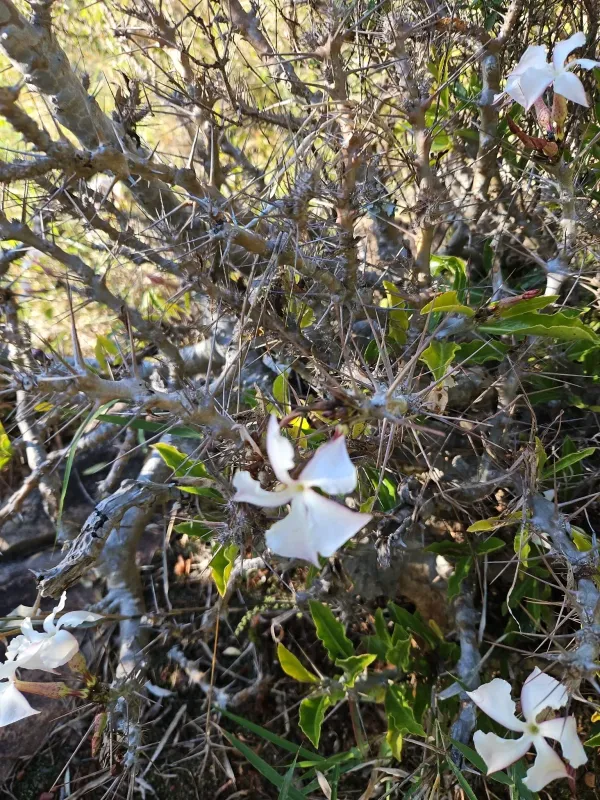
Pachypodium saundersii is a distinctive succulent belonging to the Apocynaceae family. Native to the rocky slopes and dry savanna regions of Southern Africa, it is widely recognized for its unique, bottle-shaped caudex that acts as a water reservoir.
The plant features a succulent stem adorned with pairs of sharp spines, which provide defense against herbivores in its natural environment. As a slow-growing species, it is highly valued by collectors for its architectural aesthetic.
Cultivation requires bright, direct sunlight to maintain the plant's structural integrity. Insufficient light levels will cause the plant to etiolate, resulting in weak, elongated stems that lose their typical, robust appearance.
The soil must be exceptionally well-draining, consisting of a mix of pumice, coarse sand, and organic material. Proper drainage is the most critical factor in successful cultivation to prevent root rot.
Watering should be carefully regulated, allowing the substrate to dry completely between applications. During the winter dormancy period, the plant requires significantly less water and should be kept in a cool, bright location to rest.
Main diseases and pests
Root rot remains the primary threat to Pachypodium saundersii, usually caused by overwatering or using a substrate that retains too much moisture for extended periods.
Spider mites are the most common pests that thrive in the dry environments preferred by these succulents, often causing damage to the skin of the caudex and leaves.
Mealybugs are frequently found clustering in the crevices between the spines, where they are protected from manual removal and can cause significant sap loss.
Scale insects can also infest the succulent, leading to stunted growth and the potential development of sooty mold on the honeydew they excrete during feeding.
Managing these threats requires a combination of appropriate environmental controls, regular inspection for early signs of infestation, and the application of suitable horticultural pesticides.