
Pachypodium windsorii
Pachypodium windsorii
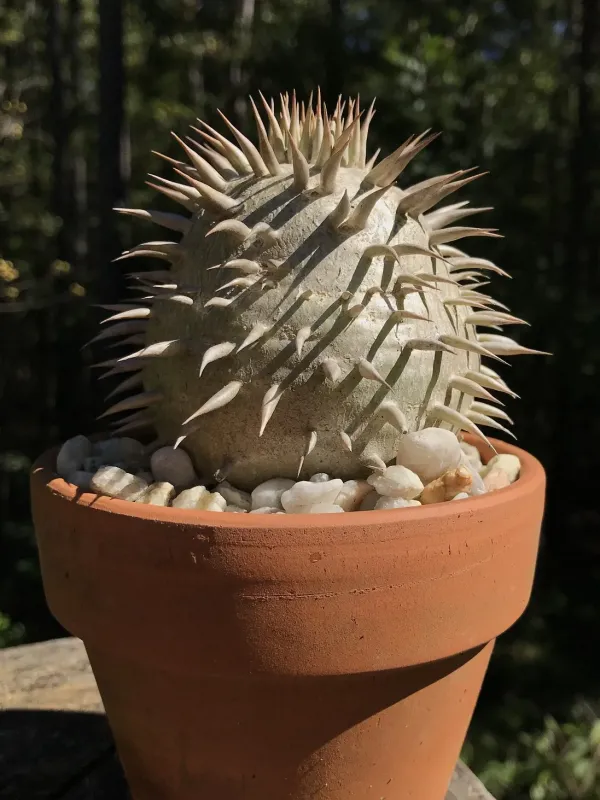
Description
Sowing dates
Sowing Pachypodium windsorii seeds is best performed in early spring to utilize the increasing day length and solar intensity for seedling growth.
Seeds should be sown on a fine, well-draining substrate mix consisting of grit, sand, and fine pumice to provide adequate support and air circulation.
A consistent temperature of 25–30 degrees Celsius is critical for the germination process, which typically lasts from two to four weeks.
Covering the seed tray with a clear lid creates a humid microclimate, but daily ventilation is mandatory to prevent fungal development on the surface.
Once seedlings develop their first true leaves, they should be gradually acclimated to lower humidity levels to harden their tissues.
Growing requirements
Pachypodium windsorii belongs to the Apocynaceae family and is recognized for its unique swollen caudex, which is an adaptation to arid environments.
Native to rocky habitats in Madagascar, the plant requires a highly porous mineral soil mix to allow for rapid drainage and root aeration.
This succulent thrives in full sun exposure and requires high light intensity to maintain a compact growth habit and proper caudex development.
Irrigation must be strictly managed, providing water only when the growing medium is completely dry during the active growing season.
During the winter dormancy phase, watering should be significantly reduced or stopped to mimic the natural dry season of its native habitat.
Main diseases and pests
The primary threat to the plant's health is overwatering, which quickly causes root decay and rot in the stem, often leading to irreversible damage.
Pests such as mealybugs often hide in the crevices of the trunk or the base of the leaves, requiring prompt manual removal or treatment.
Spider mites are common in indoor collections, especially in dry air, and can cause significant foliage damage if left untreated for long periods.
Poor air circulation increases the risk of fungal infections and mold growth, which can compromise the structural integrity of the plant.
Consistent monitoring and maintaining a balanced, well-ventilated environment are the most effective strategies for long-term plant health.