
Periploca aphylla
Periploca aphylla
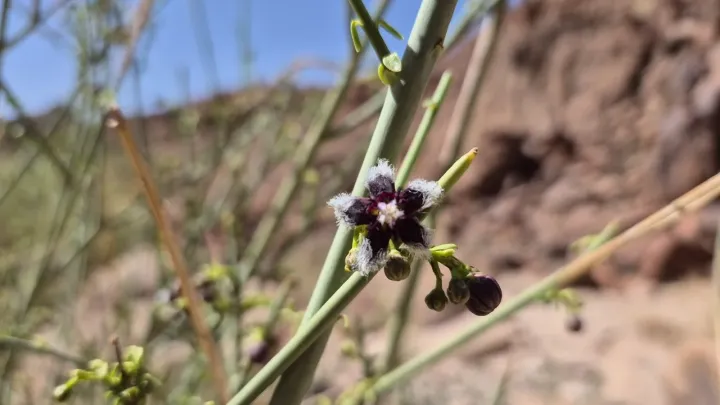
Description
Growing requirements
Periploca aphylla is a drought-tolerant shrub belonging to the Apocynaceae family. It is distinct for its leafless, green, cylindrical branches that perform photosynthesis, allowing the plant to survive in harsh, sun-drenched environments.
The native range of this species extends across the arid regions of West Asia, particularly in areas with low annual precipitation. It is commonly found growing on rocky hillsides, desert plains, and sandy soils where moisture is extremely limited.
To cultivate this species, one must ensure excellent soil drainage, as the plant is highly sensitive to waterlogging. It thrives in full sun, and its growth is significantly restricted in shaded or humid environments, which can lead to rapid decline.
The agronomic management of Periploca aphylla focuses on mimicking its natural habitat. Irrigation should be applied only during extreme droughts, and the soil should remain lean and unfertilized to prevent excessive, weak growth.
The plant has diverse хозяйственное (economic) utility, ranging from traditional medicine to the utilization of its fibers. Its ability to stabilize loose soil makes it a valuable species for ecological restoration projects in desertified areas.
Main diseases and pests
The primary threat to Periploca aphylla is root rot, induced by excessive irrigation or poorly draining soil. This condition is often fatal and can be prevented by ensuring that the root zone remains well-aerated at all times.
Pest pressure mainly comes from sap-sucking insects like aphids and mites. While these pests rarely kill mature, healthy plants, they can stunt growth and reduce the quality of the stems, requiring localized insecticidal intervention.
Weeds can be a significant obstacle during the establishment phase, as they compete for limited nutrients. Regular manual weeding or mulching with gravel is recommended to maintain a clean growing environment around the base of the plant.
Overgrazing by livestock is another major threat in the wild, as the plant is often consumed when other forage is scarce. Therefore, cultivation sites should be protected to ensure the survival and development of the shrub.
Despite being hardy, environmental stresses such as prolonged abnormal cold or high-humidity stagnant air can increase susceptibility to fungal infections. Monitoring the plant's structural integrity after severe storms is essential.