
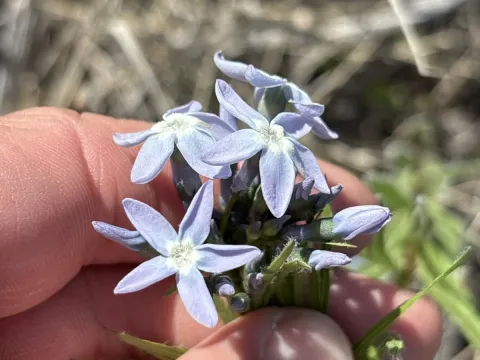
Amsonia
Amsonia
Amsonia can be propagated by seeds or through the division of mature root clumps. Sowing seeds directly into the garden in autumn is ideal as they require natural cold stratification to germinate.
What the section contains
 Amsonia ciliata x Amsonia hubrichtii
Amsonia ciliata Walter x A. hubrichtii Woodson
Amsonia ciliata x Amsonia hubrichtii
Amsonia ciliata Walter x A. hubrichtii Woodson
 Amsonia hubrichtii
 Woodson x Amsonia tabernaemontana Walter
Amsonia hubrichtii
Amsonia hubrichtii Woodson
Amsonia hubrichtii
Amsonia hubrichtii Woodson x Amsonia tabernaemontana Walter
Amsonia hubrichtii
Amsonia hubrichtii Woodson
 Amsonia hybrid
Amsonia rigida Shuttlew. ex Small x Amsonia tabernaemontana Walter
Amsonia rigida
Amsonia rigida Shuttlew. ex Small
Amsonia hybrid
Amsonia rigida Shuttlew. ex Small x Amsonia tabernaemontana Walter
Amsonia rigida
Amsonia rigida Shuttlew. ex Small
 Amsonia tabernaemontana
 Walter
Amsonia tabernaemontana
Amsonia tabernaemontana Walter
 Fringed bluestar
Amsonia ciliata Walter
Fringed bluestar
Amsonia ciliata Walter
Amsonia
If seeds are sown in the spring, they must be pre-chilled in a refrigerator for at least two months to break dormancy and ensure high germination rates.
Vegetative propagation is best achieved by dividing clumps in early spring or late summer. Careful handling of the root system is necessary to minimize stress to the mother plant.
Space the plants approximately 40 to 60 centimeters apart to allow enough room for the mature foliage, which forms dense, attractive mounds over time.
Young seedlings grow slowly, so keeping the area free of weeds during the first season of growth is vital for establishing a strong, healthy root system.
Amsonia thrives in full sun but can tolerate partial shade, which is beneficial in regions with intensely hot and dry summer climates.
The plant is not overly demanding regarding soil type; however, it performs best in fertile, well-drained loamy soils that maintain adequate moisture without becoming waterlogged.
Once established, Amsonia exhibits remarkable drought tolerance, making it an excellent choice for low-maintenance garden designs and water-wise landscapes.
The plant belongs to the Apocynaceae family and is known for its exceptional winter hardiness, allowing it to survive extreme temperatures without extra protection.
Consistent, moderate watering during the initial establishment period is recommended to ensure the plant develops deep roots capable of accessing nutrients and moisture effectively.
Amsonia is widely regarded as a resilient perennial with very few significant disease issues, making it a reliable choice for sustainable gardening practices.
Slugs and snails can occasionally cause damage to the tender young foliage in early spring, particularly during periods of frequent rainfall and high humidity.
Root rot is the primary threat if the soil remains excessively wet for long periods; therefore, ensuring proper drainage is the most effective preventative measure.
While aphids may occasionally appear on the flower clusters, they rarely cause enough damage to require chemical intervention, often being managed by natural predators.
Standard garden maintenance, such as cleaning up debris in late autumn and ensuring proper spacing for air circulation, remains the best defense against potential plant health issues.