
Amsonia hubrichtii
Amsonia hubrichtii Woodson x Amsonia tabernaemontana Walter
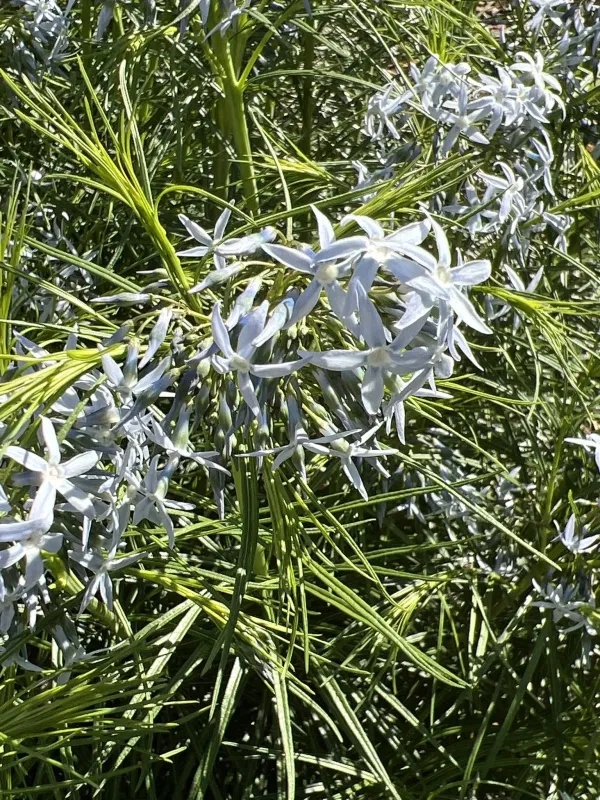
Description
Sowing dates
Propagation of Amsonia hubrichtii is typically performed via seed or division. Seeds require a cold stratification period of several weeks to break dormancy, making late autumn planting ideal for outdoor sowing.
If sowing indoors, place seeds in moist soil and refrigerate them for approximately eight weeks before moving them to a warm germination environment. This process mimics the natural winter-to-spring cycle.
Division of established clumps is the most efficient method for home gardeners. Dig up the root ball in early spring and carefully slice it into smaller segments, ensuring each piece has healthy root growth.
Softwood cuttings can also be taken in late spring or early summer. Keep them in a humid environment with indirect light until roots form, which usually takes about three to four weeks.
Once established in pots, young seedlings or divisions should be acclimatized to outdoor conditions before being planted in their permanent garden positions.
Growing requirements
Amsonia hubrichtii, commonly known as threadleaf bluestar, is a member of the Apocynaceae family. It is a perennial herbaceous plant valued for its fine-textured, needle-like foliage and clusters of star-shaped flowers.
The plant thrives in full sun to partial shade. While it adapts to a variety of light conditions, full sun exposure is recommended to maintain the plant's upright form and maximize autumn leaf color.
Well-draining soil is essential for success. While Amsonia is adaptable, it prefers loamy or sandy soils that do not stay waterlogged, as poor drainage is the primary cause of root failure.
It is remarkably drought-tolerant once established, requiring little supplemental watering. This makes it an excellent choice for low-maintenance landscapes and sustainable garden designs.
Pruning is usually not required; however, some gardeners prefer to cut the stems back by half in late spring to encourage a tighter, more compact habit if the plant is grown in shade.
Main diseases and pests
Amsonia hubrichtii is highly resistant to both diseases and pests. Its bitter, milky sap acts as a natural deterrent, keeping deer, rabbits, and most herbivorous insects away from the plant.
The most common threat is crown rot or root rot, which occurs strictly due to overwatering or heavy, poorly drained clay soils. Ensuring proper soil aeration is the best preventive measure.
Rust or fungal spots are rare and usually appear only in areas with poor airflow. Thinning out surrounding vegetation can improve air circulation and mitigate these environmental risks.
In cases of infestation or infection, sanitary practices such as removing affected tissues are encouraged. Chemical intervention is rarely necessary for this robust perennial.
Periodic monitoring during periods of excessive humidity is recommended. Providing adequate space between plants prevents the development of localized moisture pockets that favor pathogen growth.