
Fringed bluestar
Amsonia ciliata Walter
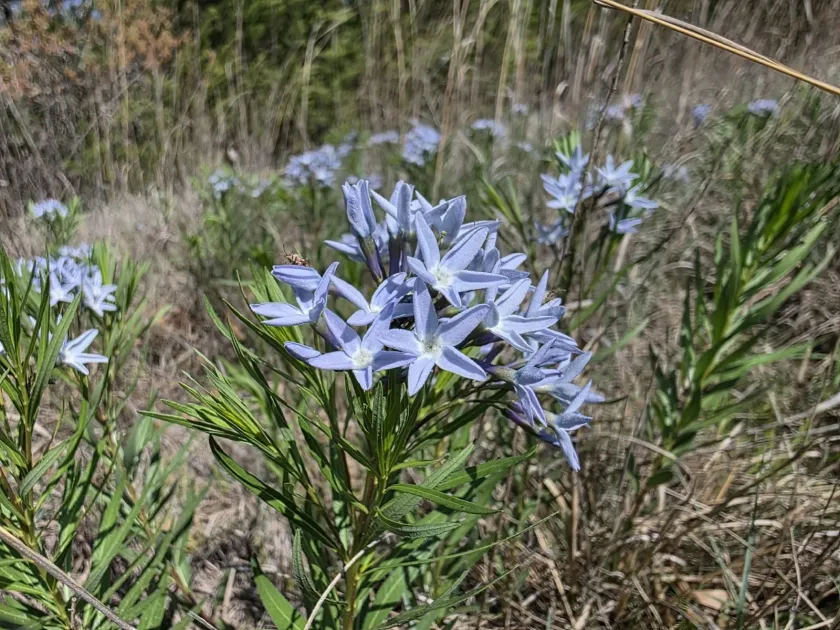
Description
Sowing dates
The propagation of Fringed bluestar is typically achieved through seed sowing or division of the root mass. Seeds should be sown in autumn or early spring, ideally following a cold stratification period of four to six weeks to break dormancy.
Vegetative propagation via root division is best performed during the plant's dormancy phase, specifically in early spring before new growth appears. Care must be taken to minimize root disturbance to ensure quick establishment.
When starting seeds, use a well-draining seed-starting mix and maintain consistent moisture. The seedlings grow relatively slowly during the first season and require protection from intense direct heat and drying winds.
Transplanting into the garden bed should occur after the final frost. When planting, the crown of the plant should be positioned at the same depth it grew in the container to prevent crown rot.
Proper spacing is crucial for the long-term health of the clump. A minimum of 50 centimeters between plants ensures that air can circulate freely, which is essential for managing moisture levels around the foliage.
Growing requirements
Fringed bluestar belongs to the Apocynaceae family and is native to the southeastern United States. It is a perennial herbaceous plant valued for its unique, narrow, ciliate leaves and clusters of star-shaped blue flowers.
This plant thrives in full sun but adapts well to partial shade. In its natural habitat, it is found in dry, sandy soils, suggesting high tolerance for varying light conditions and moderate drought once established.
The soil should be well-drained and neutral to slightly acidic in pH. While it can survive in poor soils, adding organic matter such as compost helps improve growth vigor and overall resilience of the plant.
Watering is essential for young plants to develop a robust root system. Mature plants are quite resilient and generally require minimal supplemental watering except during periods of extreme, prolonged drought.
The plant is highly hardy and can withstand diverse climatic conditions. Its stems provide structural interest throughout the season and turn a beautiful golden-yellow hue in the autumn, adding to its landscape value.
Main diseases and pests
Amsonia ciliata is remarkably resistant to many common plant diseases and pests. Its chemical profile, which includes alkaloids, generally makes it unpalatable to deer, rabbits, and many insect species.
The primary concern for this crop is fungal infection caused by poor drainage or excessive humidity. Root rot can occur if the soil remains waterlogged for extended periods, leading to systemic plant failure.
If the garden environment is overly humid and stagnant, fungal pathogens might affect the leaves. To mitigate this risk, gardeners should ensure good site selection with adequate air circulation and proper sun exposure.
Pests such as aphids or spider mites are rare but may occasionally appear during hot, dry spells. Monitoring the undersides of leaves and using mild horticultural soaps is usually sufficient to control minor infestations.
General maintenance, including the removal of dead stems in late winter, helps keep the plant healthy and prevents the accumulation of plant debris that could harbor pathogens or unwanted insects.