
Amsonia hubrichtii
Amsonia hubrichtii Woodson
Description
Growing requirements
Amsonia hubrichtii, commonly known as thread-leaf bluestar, is a herbaceous perennial belonging to the Apocynaceae family. Native to the central United States, it is widely recognized for its high ornamental value.
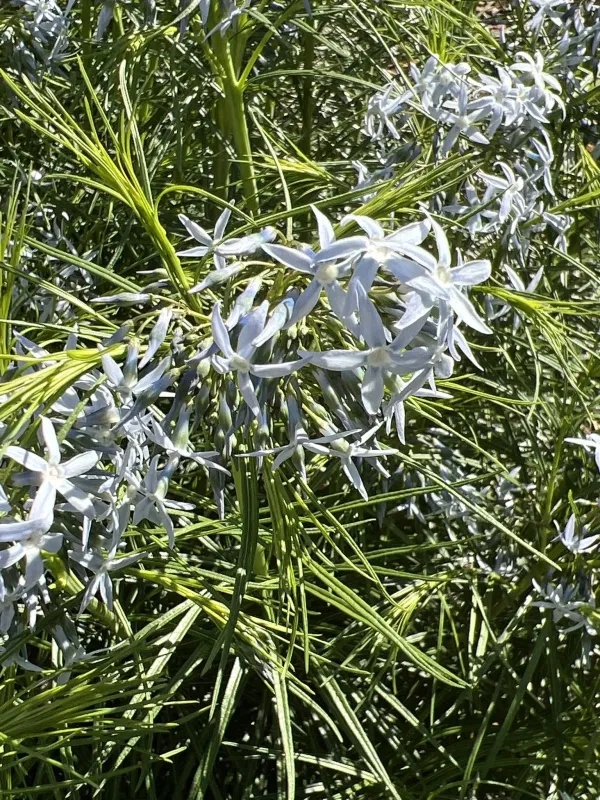
This plant is highly regarded for its distinctive, fine-textured, needle-like foliage that provides a soft, wispy appearance throughout the growing season. In spring, it produces clusters of star-shaped, pale blue flowers.
It thrives best in full sun to partial shade conditions. While it is quite adaptable to various light exposures, full sun promotes denser foliage and more robust stem growth throughout the summer.
Soil requirements are relatively modest; the plant prefers well-drained, fertile soil. It is notably drought-tolerant once it has established a deep and extensive root system in the garden landscape.
Regarding climate, this species is exceptionally hardy and can withstand a wide range of temperatures. It requires very little maintenance, making it an ideal candidate for low-input landscapes.
Main diseases and pests
Amsonia hubrichtii is renowned for its excellent health and vigor. It is rarely troubled by serious insect pests, primarily due to the milky, bitter sap that acts as a natural deterrent.
The most significant threat to its longevity is poorly drained soil. If the roots remain saturated for extended periods, particularly during winter dormancy, they are prone to fungal rot.
Foliar diseases are uncommon but may occur in very crowded or poorly ventilated garden settings. Maintaining proper spacing between plants is the most effective preventative measure.
Gardeners rarely need to use chemical pesticides on this crop. Environmental sanitation, such as removing fallen debris near the base in spring, is usually sufficient to maintain a healthy environment.
Overall, the plant is remarkably resilient. By providing a site with adequate drainage and moderate sunlight, the gardener effectively eliminates almost all potential pathological risks.