
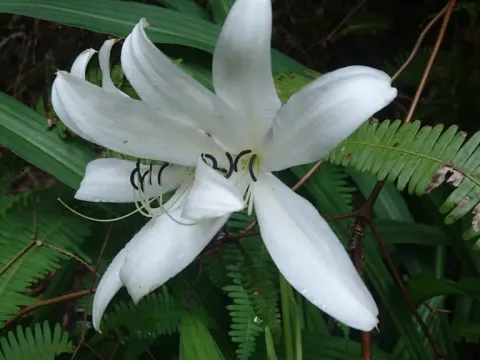
Crinum
Crinum L.
Crinum L. is a genus of perennial bulbous plants belonging to the Amaryllidaceae family. Recognized for their large, spectacular, and often fragrant flowers, these plants have significant ornamental value and are widely cultivated in botanical gardens, greenhouses, and landscapes within tropical and subtropical regions.
What the section contains


Crinum
Native to warm areas in Africa, Asia, and the Americas, Crinums are naturally adapted to moist environments, often thriving near riverbanks or in marshy habitats. Their distribution underscores their preference for high humidity and consistent warmth throughout the growing season, which is essential for healthy development.
The botanical structure consists of a large, sometimes massive bulb, long strap-like leaves, and tall stalks bearing showy, umbrella-shaped inflorescences. The size of the bulb serves as an energy reserve, allowing the plant to survive fluctuations in climate and ensuring robust flowering cycles during the peak of the season.
Effective cultivation requires fertile, well-draining soil that remains consistently moist but not waterlogged. Plants need bright, indirect sunlight to reach their full potential. In agricultural or horticultural settings, ensuring adequate spacing is crucial to prevent competition for nutrients and to maintain good air circulation.
Beyond decoration, the plant holds potential interest for medicinal research due to the complex alkaloids found within its tissues. Agricultural efforts are often directed toward breeding programs aimed at developing more resilient varieties that can adapt to slightly wider temperature ranges while retaining their signature aesthetic appeal.
The primary threats to Crinum crops are fungal infections, particularly those triggered by excessive moisture and poor drainage. Stagonospora curtisii, commonly known as red blotch, is a significant pathogen that affects bulb health and can lead to structural decay if not managed through proper care.
Common insect pests include mealybugs, scale insects, and spider mites. These pests thrive in indoor environments or dry greenhouse conditions, feeding on plant sap and causing yellowing or weakening of the foliage. Infestations can spread rapidly if the affected plants are not treated promptly.
Integrated pest management, including regular inspection and the use of targeted insecticides or miticides, is necessary to maintain crop health. In many cases, mechanical removal of infested foliage is the first step before applying any chemical treatments to the soil or leaves.
Proactive management of the growing environment is the most effective way to prevent outbreaks. Providing adequate spacing, proper soil aeration, and precise irrigation scheduling reduces the humidity levels that favor the growth of harmful fungi and the reproduction of many common pests.
Routine bulb inspection is vital, especially during the dormant season. Any signs of rot should be addressed by trimming the affected tissue and applying a fungicide to the bulb, followed by a period of air-drying before replanting in fresh, sterile soil to ensure successful regeneration.