
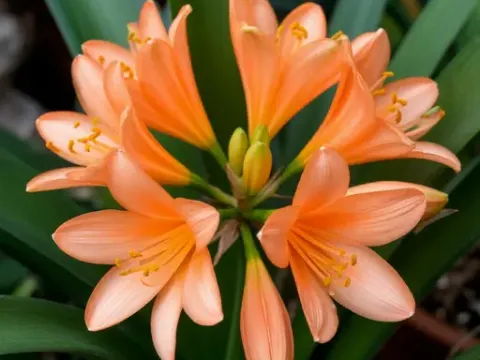
Clivia
Clivia Lindl.
Clivia (Clivia Lindl.) is a perennial herbaceous plant belonging to the Amaryllidaceae family. Native to the subtropical forests of South Africa, it naturally grows in shaded areas under the forest canopy, which dictates its preference for moderate lighting conditions.
What the section contains

Clivia
Botanically, the plant is characterized by fleshy, succulent roots that store moisture, allowing it to survive periods of drought. Its leaves are dark green, strap-shaped, and arranged in a fan-like rosette, while the inflorescences consist of clusters of trumpet-shaped, vibrant flowers.
For successful agricultural practice, Clivia requires bright but indirect sunlight to avoid leaf scorching. During the vegetative cycle, moderate temperatures are preferred, while a distinct cool rest period during the winter months is essential for triggering the next flowering cycle.
The growing medium should be well-draining, rich in organic matter, and slightly acidic to neutral. A typical potting mix includes a combination of peat-based substrate, bark, and perlite or coarse sand, ensuring that excess water can escape freely from the container.
In terms of economic use, Clivia is a significant ornamental crop in horticulture. It is widely cultivated for indoor decoration, interior landscaping, and conservatories, valued primarily for its longevity and its ability to thrive in indoor environments with limited maintenance.
Clivia is susceptible to common pests such as mealybugs and scale insects, which often congregate on the underside of leaves and near the base. Improper watering practices, particularly waterlogging, significantly increase the risk of root rot, which can be lethal to the plant.