
Crinum bulbispermum
Crinum bulbispermum (Burm. f.) Milne-Redh. & Schweick.
Description
Growing requirements
Crinum bulbispermum is a resilient perennial herb belonging to the Amaryllidaceae family. Native to South Africa, it is commonly found in damp grasslands and along riverbanks, which indicates its adaptation to fluctuating moisture levels throughout the year.
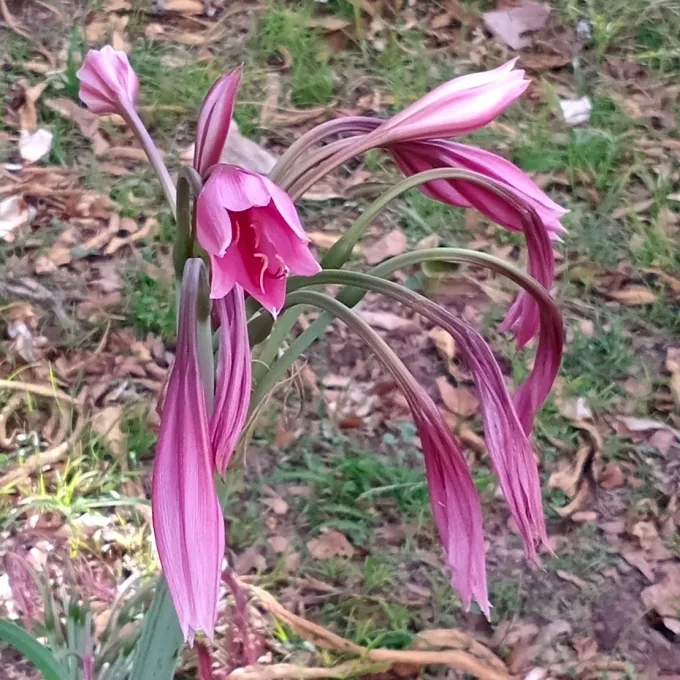
The plant is defined by its large, globose bulb featuring a distinct neck. Its foliage consists of long, strap-shaped leaves that can reach up to a meter in length. The inflorescence is a robust umbel of large, fragrant, trumpet-shaped flowers, typically white or pink with a deep reddish-purple stripe running down the center of each tepal.
Successful cultivation requires full sun exposure to promote healthy blooming cycles. While the plant is hardy, it benefits from deep planting in regions prone to frost, which protects the bulbous structure from extreme temperature drops during the dormant winter season.
The ideal growing medium is a rich, loamy, and well-draining soil. Drainage is the most critical factor; since the plant originates from seasonally wet areas, it can tolerate moisture but will succumb to bulb rot if the soil remains waterlogged for extended periods.
Agrotechnical practices involve consistent irrigation during the growth phase, paired with balanced liquid feeding to support the development of the foliage and subsequent floral display. Once flowering is finished, reducing water intake helps the plant transition into its natural dormancy phase.
Main diseases and pests
The most common pests affecting this crop include mealybugs and spider mites, especially in protected environments or greenhouses with low humidity. These pests feed on sap, often causing stunting and yellowing of the foliage if left unchecked.
Fungal pathogens such as Fusarium wilt and various forms of bulb rot pose a significant risk, particularly when soil drainage is insufficient. Good horticultural hygiene, including the removal of dead leaves and the use of fungicide dips for bulbs during transplantation, is essential for maintaining crop health.