
Crinum amoenum
Crinum amoenum
Description
Growing requirements
Crinum amoenum is a perennial bulbous flowering plant belonging to the Amaryllidaceae family. Native to the tropical regions of India and the Himalayas, this species thrives in humid forest environments and mountainous slopes.
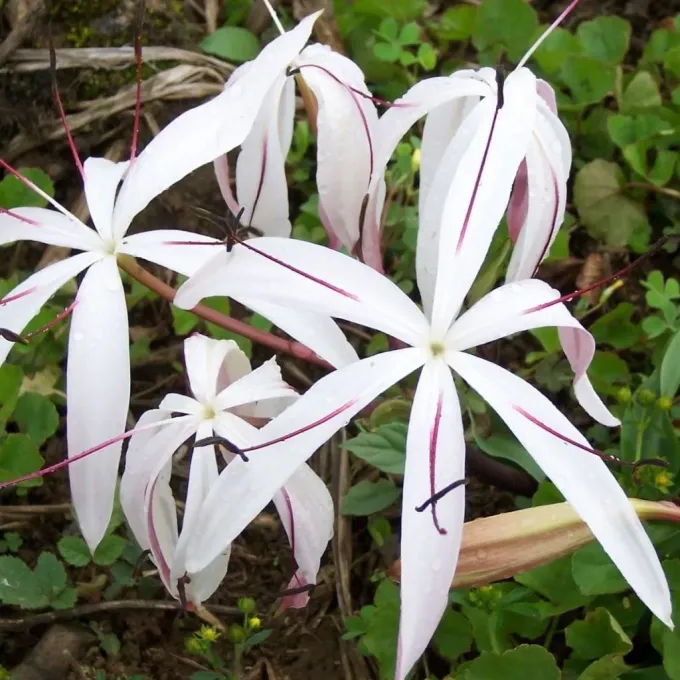
Botanically, the plant features large, subterranean bulbs and long, linear, strap-shaped leaves that can reach significant lengths. Its primary ornamental value lies in its fragrant, white, trumpet-shaped flowers arranged in umbels, which typically emerge on sturdy stalks.
The culture requires a warm, tropical climate to flourish, as it is highly sensitive to frost. When grown in temperate regions, it must be kept in greenhouses or containers that can be moved indoors during colder seasons to maintain vitality.
Soil requirements for Crinum amoenum include excellent drainage and high organic content. A mix of peat, loam, and coarse sand provides the ideal environment for the roots, ensuring that excess water drains quickly to prevent physiological stress.
Cultural management involves bright, indirect sunlight, which prevents leaf scorching while promoting flower development. During the growth phase, consistent moisture is necessary, though watering should be reduced as the plant enters its dormancy period to mimic natural cycles.
Main diseases and pests
The most significant threat to the health of Crinum amoenum is bulb rot caused by fungal pathogens in waterlogged soils. Ensuring that the soil medium remains aerated is the most effective preventative measure against these infections.
Common insect pests include spider mites and scale insects, which often colonize the foliage in low-humidity environments. Integrated pest management, including regular inspection and the use of insecticidal soaps, is essential for maintaining plant vigor.