
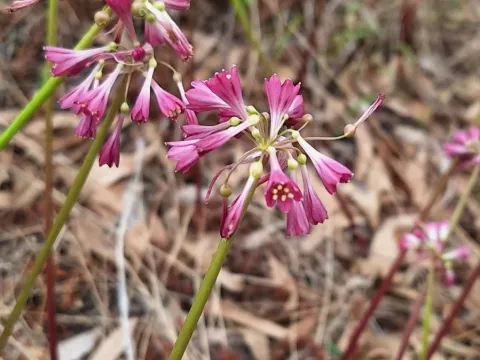
Calostemma
Calostemma
Propagation of Calostemma is primarily achieved through the separation of offset bulbs, which naturally develop alongside the parent plant during its growth cycle.
What the section contains


Calostemma
The optimal time for planting these bulbs is during the dormancy phase, ensuring the plant has enough energy reserves to establish roots before the next growth spurt.
Seed propagation is also a viable option; however, since the seeds possess short longevity, they must be sown immediately after maturation for the best germination rates.
For planting, use a light, well-draining potting mix that encourages healthy root development while preventing excessive moisture retention around the bulb.
When planting, ensure the neck of the bulb is positioned just above or at the soil surface to maintain correct planting depth and avoid rot.
Calostemma is a member of the Amaryllidaceae family and is native to Australia, where it has adapted to environments with distinct seasonal variations in precipitation.
The plant requires bright, indirect sunlight to thrive, though it benefits from light shade during the peak of summer to prevent the scorching of its foliage.
Soil conditions must be neutral to slightly acidic, highly porous, and rich in organic matter to provide both nutrients and efficient drainage for the bulb.
Temperatures should be kept between 20 and 25 degrees Celsius during the active growth season, with a significant drop during the rest period to mimic natural cycles.
Watering management is crucial: provide regular moisture during the active vegetative phase and allow the medium to dry out almost completely during the dormancy stage.
The main threats to Calostemma are fungal pathogens, which frequently occur when drainage is insufficient or when the plants are grown in poorly ventilated areas.
Bulb rot, caused by overwatering or stagnant moisture, is the most common ailment that can cause the rapid deterioration of the plant's root system.
In terms of pests, spider mites and mealybugs are the most typical adversaries, feeding on the plant tissues and weakening the overall health of the specimen.
To mitigate these risks, it is essential to monitor the plants frequently and ensure that environmental conditions—such as light and airflow—are consistently maintained.
If an infestation or infection occurs, standard agricultural practices such as targeted fungicide applications or acaricide treatments should be implemented immediately.