
Blood Lily
Haemanthus coccineus
Description
Growing requirements
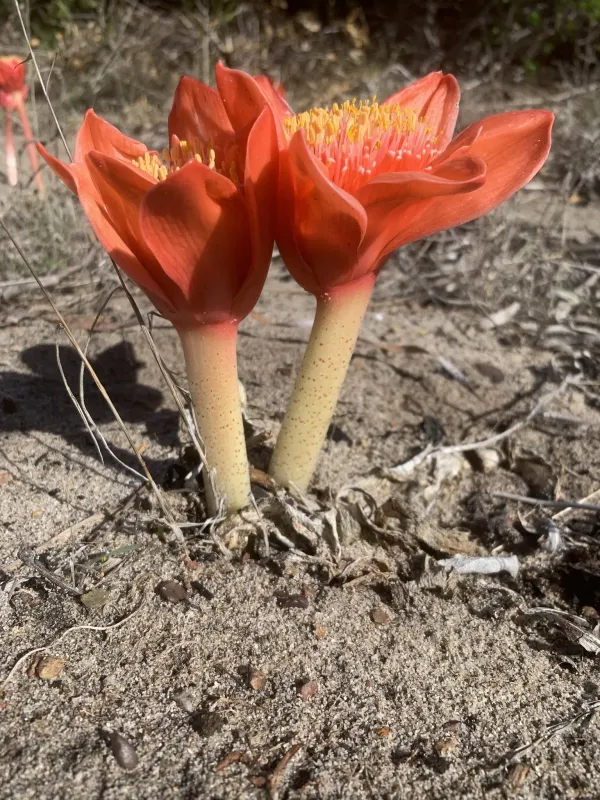
The Blood Lily (Haemanthus coccineus) is a perennial bulbous plant belonging to the Amaryllidaceae family. Originating from the Cape region of South Africa, it has evolved to thrive in harsh, rocky environments with distinct wet and dry seasons.
Successful growth of this crop requires a precise balance of light and temperature. It prefers bright, indirect light to stimulate flowering while avoiding direct midday sun, which can cause severe dehydration of its succulent leaves.
Soil requirements for Haemanthus coccineus are non-negotiable regarding drainage. A gritty, well-draining substrate composed of potting soil, perlite, and coarse sand is essential to prevent root asphyxiation during the growth cycle.
Watering practices are the most critical aspect of the plant's agrotechnics. During the active growing period, moisture should be provided sparingly; however, during the dormant phase when the leaves wither, water should be withheld entirely to allow the bulb to rest.
The plant demonstrates high adaptability to temperature fluctuations within its range, but it is not frost-tolerant. Proper air circulation around the crown of the bulb is necessary to support robust growth and reduce the risk of physiological disorders.
Main diseases and pests
Fungal pathogens are the primary cause of crop failure, particularly bulb rot. This condition occurs almost exclusively when the soil is kept too moist for extended periods, especially when the plant is in its required dormant phase.
Common horticultural pests affecting the Blood Lily include mealybugs and scale insects. These pests settle under leaf bases, extracting sap and weakening the plant, which often leads to stunted growth or poor flowering performance.
Spider mites are another major threat, particularly in dry indoor environments where humidity is not managed correctly. Infestations lead to yellowing foliage and, if untreated, the eventual collapse of the plant's vitality.
Stagonospora curtisii, commonly known as red blotch, can infect bulbs and cause characteristic red lesions. Maintaining dry leaves and good hygiene during repotting is essential to keeping this pathogen in check.
Chemical control must be applied with caution, ensuring that all treatments are suitable for bulbous plants to avoid phytotoxicity that could kill the plant tissues during the sensitive phases of its biological cycle.