
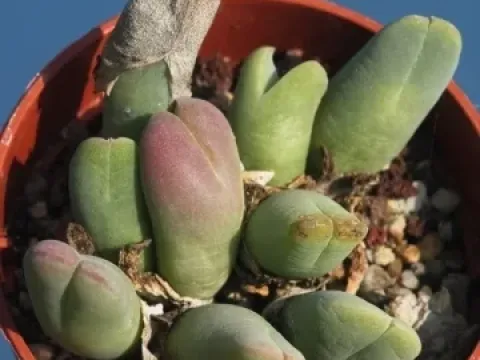
Vanheerdea
Vanheerdea
Vanheerdea is a genus of small, succulent plants belonging to the Aizoaceae family, native to the arid regions of Southern Africa. In cultivation, propagation is primarily done via seeds, which are sown in late winter or early spring to take advantage of the increasing daylight hours.
What the section contains


Vanheerdea
The sowing substrate should be highly porous, consisting of a mix of coarse sand, perlite, and a small amount of fine soil. Seeds are sown on the surface and lightly covered with a thin layer of fine grit to maintain stability and moisture levels.
Germination requires a stable temperature range between 20°C and 25°C. The surface must be kept consistently moist using a fine mist sprayer, though extreme saturation should be avoided to prevent damping-off diseases in young seedlings.
As the seedlings develop their first true leaves, the frequency of watering is gradually reduced to encourage the plant to adapt to its typical succulent growth pattern. Pricking out is usually performed when the seedlings are large enough to handle safely.
Growth is generally slow, requiring patience from the grower. Providing bright, indirect light immediately after germination helps prevent early etiolation of the fragile young stems.
Vanheerdea requires full exposure to bright sunlight to maintain its compact, distinct growth habit. In greenhouse or indoor conditions, it should be placed in the sunniest location available to ensure healthy tissue development.
The ideal soil is a gritty, fast-draining mineral mix with minimal organic matter. It is essential to use pots with sufficient drainage holes to ensure that excess water can escape immediately after irrigation.
Watering should be strictly regulated. During the active growth season, water sparingly only when the substrate is entirely dry. During the winter dormant phase, the plant should remain dry and cool to prevent rot.
Temperature management is key: the plant thrives in warm, dry summers (+25°C to +30°C) and requires a cool rest period during the winter (+10°C to +12°C). This cycle is necessary for both plant health and potential flowering.
Low humidity and high ventilation are vital. Stagnant air coupled with high humidity can easily lead to tissue breakdown or fungal infections, making airflow a critical component of successful maintenance.
The primary threat to Vanheerdea is root rot caused by moisture retention in the growing medium. Once rot reaches the core of the succulent, recovery is extremely difficult, emphasizing the importance of preventing overwatering.
Pests such as mealybugs and root mealybugs can infest the plant, hiding in the junctions between leaves. Periodic inspection of the foliage is recommended, and if an infestation is found, a systemic insecticide should be applied.
Sunburn can occur if the plant is moved abruptly from low-light conditions to direct, intense sun. Gradual acclimation is necessary to allow the epidermis to adjust to high UV exposure without sustaining damage.
Improper ventilation in combination with high heat can attract spider mites, which leave fine webs and cause stippling on the succulent leaves. Maintaining good air movement is a primary prophylactic measure against these pests.
Overall, keeping the plant in a dry, well-ventilated, and bright environment significantly reduces the risk of most biotic and abiotic threats, allowing the succulent to maintain its health for many years.