
Vanheerdea divergens
Vanheerdea divergens
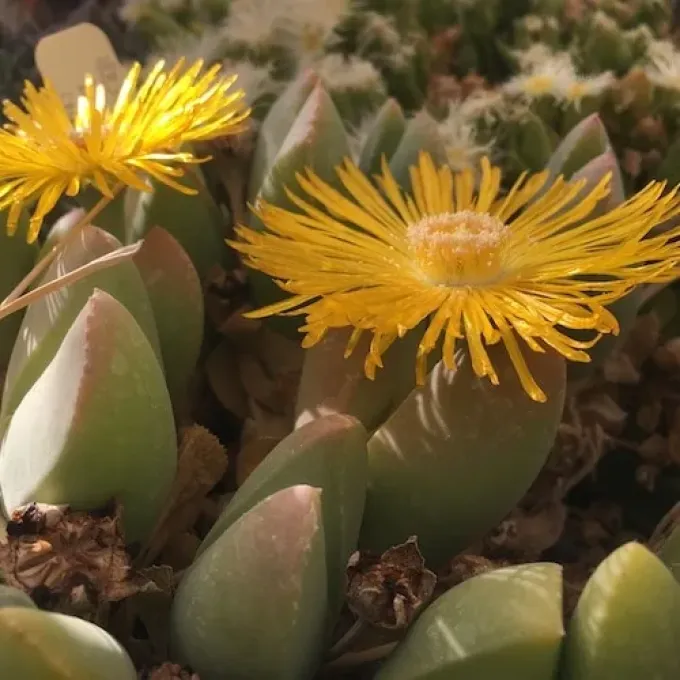
Description
Growing requirements
Vanheerdea divergens is a specialized succulent belonging to the Aizoaceae family. Native to the arid regions of South Africa, it is a highly adapted plant known for its distinctive appearance and slow growth rate in natural desert habitats.
The plant structure consists of two thick, succulent leaves that form a compact, rounded shape. This morphology allows it to store significant amounts of water, enabling the plant to survive long periods of drought in its native rocky environment.
Successful cultivation requires a mineral-based, porous soil mix. Standard potting soil is unsuitable; instead, a mixture of coarse sand, perlite, and fine gravel is recommended to ensure that water drains away from the roots immediately.
Sunlight is the most critical environmental factor for Vanheerdea. It needs bright, direct light for most of the day to maintain its compact shape and prevent the leaves from stretching or becoming deformed.
Temperature control is essential for the plant's health. During the active growing season, warm conditions are preferred, while the dormant winter period requires cool, dry air to encourage natural development and potential flowering in spring.
Main diseases and pests
The primary threat to Vanheerdea divergens is overwatering, which leads to rapid tissue decay. Once rot sets in, it is extremely difficult to reverse, often resulting in the loss of the plant due to the succulent nature of its leaves.
Mealybugs are the most common pest to look out for. These insects hide in the crevices between the leaves, making them difficult to detect. Regular inspection and the use of insecticidal soap are recommended for management.
Spider mites can also attack the plant, especially in conditions where the air is too dry and stagnant. These pests damage the epidermis, leaving permanent scarring that significantly detracts from the plant's aesthetic value.
Fungal infections can occur if water remains trapped in the center of the plant or if ventilation is insufficient. Providing good airflow is crucial to preventing the buildup of humidity around the plant's surface.
Incorrect fertilization can cause fragile, rapid growth that makes the plant more susceptible to pests and physical damage. It is best to fertilize only during the height of the growing season using a very dilute, balanced formula.