
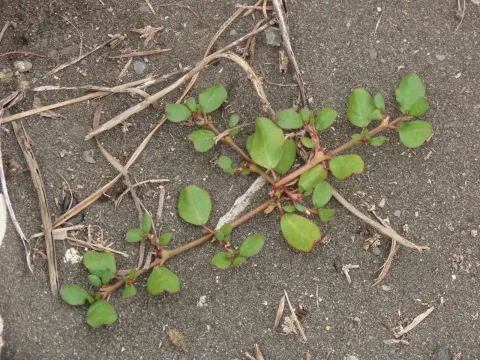
Trianthema
Trianthema
Sowing of Trianthema should be performed during periods of consistent warmth, as this crop is highly temperature-sensitive. The ideal time is late spring when soil temperatures reach 20-25 degrees Celsius to ensure rapid germination.
What the section contains

Trianthema
Seeds are sown at a depth of 1-2 centimeters in well-tilled, friable soil. Providing adequate spacing is essential, as the plant spreads quickly, forming a dense ground cover that can compete with other plants.
In regions with shorter growing seasons, starting the crop in greenhouse trays is recommended. Seedlings can be transplanted once the risk of frost has completely passed and the soil has sufficiently warmed up.
Direct sowing requires consistent moisture during the initial 7-10 day germination window. Once established, the crop demonstrates high vigor and rapid growth, quickly closing the canopy over the row spaces.
Choose an area with full sunlight for sowing, as the plant is photophilous. Shaded areas significantly reduce the biomass production and can lead to leggy, weak stems that are prone to mechanical damage.
Belonging to the Aizoaceae family, Trianthema is biologically adapted to harsh, arid, and semi-arid environments. It thrives in well-drained sandy or sandy-loam soils and displays tolerance to neutral or alkaline soil conditions.
The plant exhibits remarkable drought resistance due to its succulent leaves and stems, which store water efficiently. However, to achieve maximum commercial yields, supplemental irrigation during prolonged dry spells is highly beneficial.
Optimal growth occurs at temperatures between 25 and 35 degrees Celsius. The crop is extremely sensitive to cold and will perish if exposed to any frost or temperatures near freezing point.
Good soil drainage is critical, as the root system is susceptible to decay if water stagnation occurs in cold or saturated conditions. Incorporating organic matter during soil preparation can enhance yield potential.
Trianthema shows high salt tolerance, making it an excellent candidate for cultivation on marginal lands where other crops might fail. Its plasticity allows it to adapt to various soil structures within arid zones.
The yield of Trianthema is primarily influenced by management practices, especially the frequency of harvesting. The plant's ability to regenerate shoots allows for multiple harvests throughout a single growing season.
Rich in bioactive compounds, the biomass serves as a valuable resource for both food and pharmacological applications. Intensive cultivation with proper fertilization leads to substantial tonnage per hectare.
Yield stability is best achieved through drip irrigation, which prevents moisture stress and ensures the succulence of the harvested stems. Monitoring nutrient levels helps in sustaining rapid vegetative cycles.
Seed production in Trianthema is prolific, which can be an asset for seed-saving programs but a challenge for field management. Controlling the spread of seeds is necessary to prevent the plant from dominating nearby areas.
Standardized harvesting protocols allow for consistent profitability. Whether through manual picking or mechanical mowing, the method should be chosen based on the intended use of the end product.
The primary threats to Trianthema are fungal diseases like root rot and leaf spot, which proliferate in high humidity. Maintaining good soil drainage and avoiding over-irrigation are key preventative measures.
Pests such as aphids and leaf-eating caterpillars can cause significant damage to young tissues. Integrated pest management, focusing on early detection and biological control, is preferred over aggressive chemical use.
Due to its high competitiveness, Trianthema can act as an invasive weed in other crop fields. Strict adherence to crop rotation and careful field sanitation are essential to manage its potential expansion.
Preventing outbreaks involves using certified, disease-free seed stock. Treating seeds before planting can reduce the incidence of soil-borne pathogens during the critical early growth stages.
Climate change trends, specifically prolonged heat and drought, generally favor the species; however, managing the micro-climate via proper row spacing is vital for long-term field health.
Harvesting Trianthema should commence when the plant is in the active branching phase, just before mass flowering, to maximize the nutrient concentration and succulence of the leaves and shoots.
Clipping the shoots about 5 centimeters above the soil line stimulates the axillary buds to develop into new shoots, ensuring secondary and tertiary harvests throughout the summer months.
Immediate post-harvest processing, including shading and cooling, is required to prevent wilting and degradation of quality. Succulent tissues are prone to rapid moisture loss under high temperatures.
For seed collection, harvest when the capsules turn yellow/brown. These should be dried in a ventilated area, and the seeds can then be threshed and cleaned to remove all vegetative debris.
Store cleaned seeds in low-humidity, cool conditions to maintain viability. With proper storage, the germination rate of the seeds can remain high for several years, ensuring consistent future crop cycles.