
Vanheerdea roodiae
Vanheerdea roodiae
Description
Growing requirements
Vanheerdea roodiae is a unique succulent belonging to the Aizoaceae family. Naturally found in the arid regions of South Africa, it has perfectly adapted to the extreme environmental conditions of semi-desert landscapes.
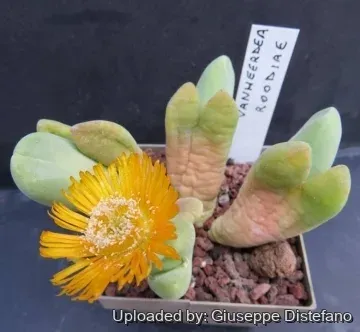
Botanically, the plant is a compact perennial consisting of fleshy paired leaves that form a semi-spherical shape. These leaves function as water storage reservoirs, allowing the plant to survive during long periods of drought in its native habitat.
Successful cultivation requires well-draining, nutrient-poor sandy soils. It is crucial to provide the plant with maximum sunlight, as lack of light causes the stems to stretch and lose their natural compact structure.
The species is extremely sensitive to excessive moisture, particularly during the winter dormancy period. Watering should be moderate and performed only after the substrate has dried out completely to prevent root rot.
The temperature regime should mimic desert conditions with significant fluctuations between day and night temperatures. The plant tolerates high daytime heat well but requires low humidity to prevent fungal infections.
Main diseases and pests
The primary threat to the plant consists of various types of rot resulting from overwatering or stagnant water at the growth point. It is essential to use growing media with a high ratio of additives like perlite or coarse sand for drainage.
Among pests, root mealybugs and spider mites are the most dangerous as they target hidden parts of the plant. Regular inspection of the leaf undersides allows for early detection of pest colonies before they cause significant damage.
If an infestation occurs, specialized systemic insecticides should be used. One must follow dosage guidelines strictly, as succulents are highly sensitive to chemical treatments and can suffer burns from improper application.
To prevent disease, ensure quality ventilation in the growing area. Stagnant, humid air promotes the growth of pathogenic flora on the surface of the leaves, which can be difficult to treat once established.
Also, keep seasonal growth cycles in mind: during the dormant phase, minimizing water intake acts as the most effective defense against most pathogens that typically attack the root crown of the plant.