
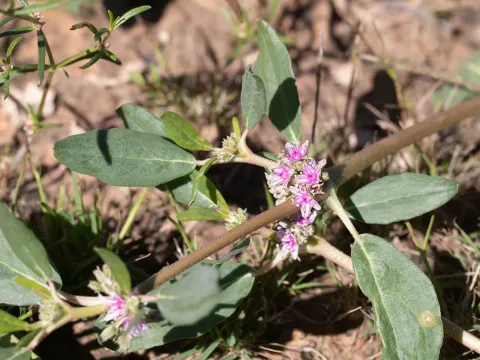
Zaleya
Zaleya
Zaleya is a genus of succulent plants within the Aizoaceae family, widely recognized for its high adaptation to arid and semi-arid environments. These plants are characterized by their ability to store moisture in fleshy stems and leaves.
What the section contains

Zaleya
Native to dry areas in Africa, Australia, and parts of Asia, these plants thrive in sandy, well-drained soils. Their evolution in desert conditions has made them exceptionally resilient to high heat and water scarcity.
Botanically, Zaleya species exhibit prostrate or spreading growth habits. The leaves are typically succulent, arranged oppositely, and possess a unique internal anatomy that regulates gas exchange during the intense heat of the day to minimize water loss.
The cultivation requirements focus on high light intensity and precise water management. The soil profile must be loose and free-draining to prevent the saturation of the root zone, which is a major physiological challenge for this species.
In economic terms, Zaleya serves as a hardy forage crop in regions where standard agricultural production fails due to drought. Its succulent nature provides a vital source of hydration for grazing livestock in remote arid territories.
The primary threats to Zaleya plantations are fungal pathogens induced by excessive humidity. These diseases typically manifest as crown and root rots when the soil remains too wet for extended periods.
Pest pressures often involve sap-sucking insects like mealybugs and spider mites, which exploit the succulent tissues of the plant. These infestations can significantly reduce plant vigor if left untreated.
Low temperature stress is a critical threat to Zaleya, as freezing temperatures cause the rupture of succulent cell walls, leading to rapid tissue death and necrosis of the stems.
Poor soil aeration acts as a physiological stressor, increasing the likelihood of pathogen development and reducing the plant's natural growth rate under field conditions.
Weed infestation during the seedling stage is a significant agronomic challenge, as the slow early growth phase makes the crop vulnerable to competition for light and nutrients.