
Marlothistella stenophylla
Marlothistella stenophylla
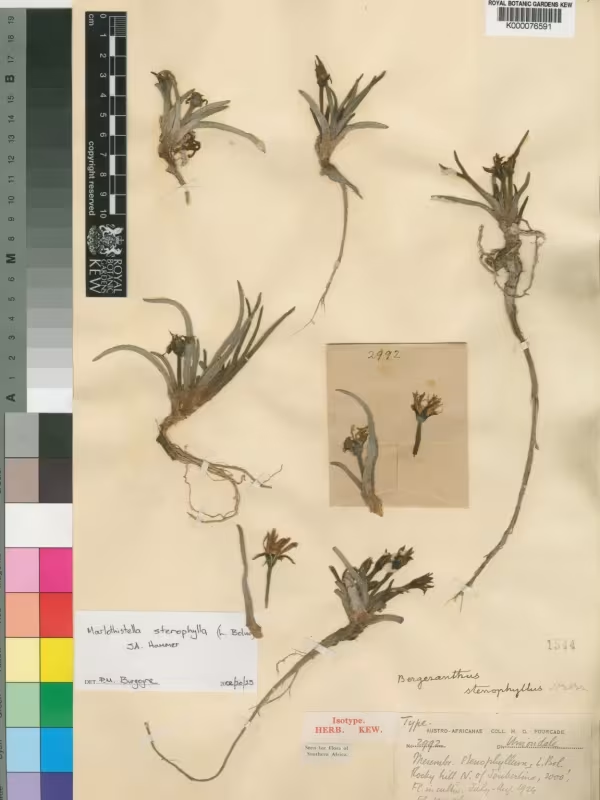
Description
Growing requirements
Marlothistella stenophylla is a distinct succulent species belonging to the Aizoaceae family, known for its narrow, succulent leaves and compact growth habit. It is highly valued in botanical collections for its structural beauty and its resilience to arid environmental conditions.
Originating from the dry regions of the Cape Province in South Africa, this plant has evolved to survive in nutrient-poor, stony soils with limited water availability. Understanding its natural habitat is crucial for successful cultivation, as it dictates the need for specialized growing conditions.
High light intensity is non-negotiable for Marlothistella stenophylla. To maintain its compact form and prevent etiolation, the plant requires direct sunlight for several hours a day. Insufficient light exposure will result in elongated stems and a loss of the plant's characteristic aesthetic appeal.
The substrate must be highly inorganic and free-draining. A typical mix for this species includes coarse sand, perlite, and small gravel to ensure that water passes through the pot quickly. Any tendency towards water retention in the soil mix will inevitably lead to root system failure.
Agricultural management requires a strict distinction between the growing season and the dormant winter period. During the winter, water must be withheld almost entirely, and the plant should be kept in a cool environment to promote healthy growth and flowering in the following spring season.
Main diseases and pests
The most significant threat to Marlothistella stenophylla is root rot, frequently triggered by overwatering or poor drainage systems. Once the succulent tissues are compromised by rot, the plant is extremely difficult to recover, making prevention through strict watering regimes essential.
Pest management involves monitoring for common succulent pests such as mealybugs, which tend to congregate in the tight leaf axils. Periodic inspections and the use of targeted systemic insecticides are recommended to maintain plant health and prevent the spread of infestations.