
Disphyma crassifolium
Disphyma crassifolium (L.) L. Bolus
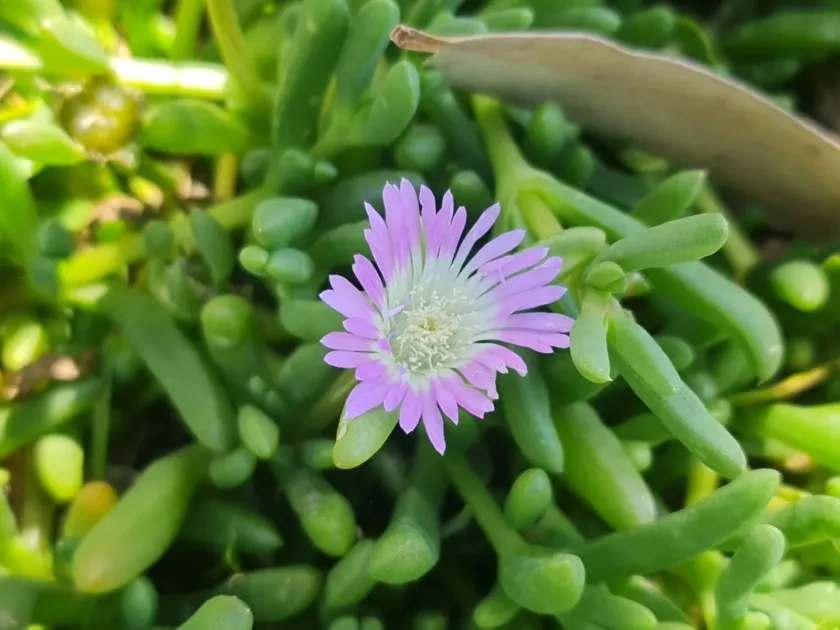
Description
Growing requirements
Disphyma crassifolium is a perennial succulent plant belonging to the Aizoaceae family, native to the coastal regions of South Africa. It is widely recognized for its creeping growth habit and high salt tolerance, making it an excellent candidate for coastal landscaping.
The botanical structure of this species includes fleshy, cylindrical leaves that serve as water reservoirs. These adaptations allow the plant to withstand prolonged periods of drought and high environmental stress, which is characteristic of its native habitat.
For agricultural and horticultural purposes, the plant requires full sun exposure to maintain its compact form and vibrant color. In shaded environments, the plant tends to lose its structural integrity and becomes significantly more vulnerable to environmental pathogens.
The soil requirements are relatively specific: the substrate must be exceptionally well-draining, such as sandy or rocky soils. Poorly drained soil inevitably leads to root rot, which is the most frequent cause of failure in the cultivation of this species.
Climate tolerance is restricted to warm to temperate zones; the plant is not frost-hardy and requires protection if temperatures drop near or below freezing. In optimal conditions, it forms a dense, continuous mat that suppresses weed growth effectively.
Harvesting
Harvesting for propagation or landscaping maintenance is performed by trimming the trailing stems. Due to the high regenerative capacity, regular pruning during the growing season encourages denser foliage development and improves the overall health of the planting area.