
Disphyma australe
Disphyma australe
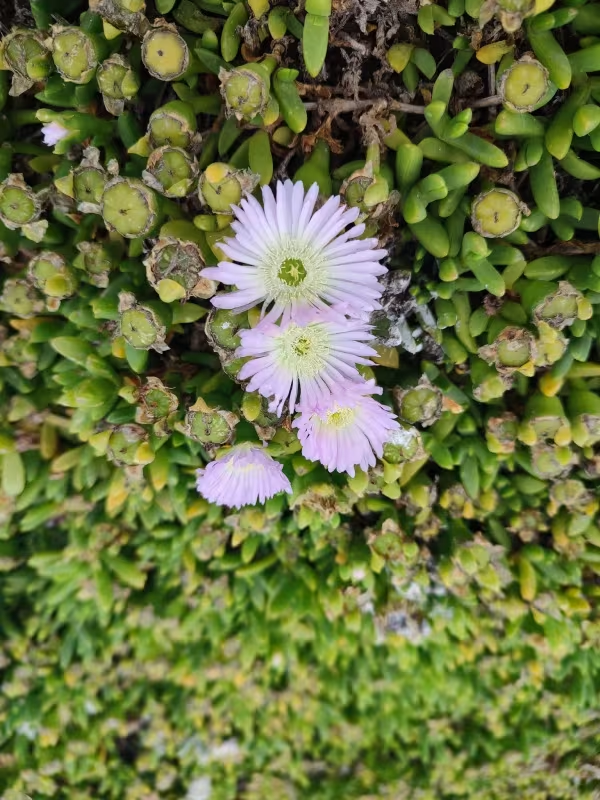
Description
Sowing dates
Propagation of Disphyma australe is primarily achieved through stem cuttings, which possess a high capacity for rooting in well-draining media.
When propagating via seeds, sow them in a light, sandy substrate and maintain a steady temperature range of 18–22 degrees Celsius.
The seeding medium should be kept slightly moist, as excessive water will lead to seed decay rather than germination.
Seedlings are best transplanted once they develop a robust root system and multiple branching points to ensure successful establishment.
Timing for propagation should align with the start of the active growing season to allow plants to harden off before any dormant period.
Growing requirements
Disphyma australe, belonging to the Aizoaceae family, is a succulent adapted to coastal environments characterized by high salinity and intense light.
The plant requires full sun exposure to maintain its compact growth form and to stimulate prolific flowering throughout the year.
Soil requirements include excellent drainage; the plant thrives in gritty, sandy, or rocky soils that prevent water accumulation around the roots.
It is highly resistant to salt spray and soil salinity, making it an excellent candidate for coastal landscaping and reclamation projects.
Temperature tolerance is limited in frost-prone areas, as the succulent tissues are susceptible to freezing damage at sub-zero temperatures.
Yield
The primary economic value of this crop is its function as a ground cover plant for soil erosion control on coastal banks and embankments.
Its rapid spreading habit allows for the quick stabilization of loose soil, providing an effective bio-engineering solution for land management.
While not a traditional food crop, its utility in phytoremediation is significant for reclaiming degraded lands with high salt concentrations.
In ornamental settings, the yield is measured by the density of the foliage mat and the abundance of its characteristic purple or white flowers.
Sustainable biomass production is achieved through consistent nutrient management and regular pruning to encourage thick, healthy growth.
Main diseases and pests
The most significant threat to Disphyma australe is over-irrigation, which causes rapid root rot and overall plant collapse.
Pests such as mealybugs often hide in the dense clusters of succulent leaves, requiring attentive inspection and targeted pest control measures.
Spider mites can become problematic in greenhouses or areas with low relative humidity, causing pale spotting and eventual leaf drop.
Fungal pathogens causing leaf spot may occur when air circulation is poor, necessitating adequate spacing between individual plants.
Effective management involves monitoring moisture levels and applying specialized horticultural soaps or systemic insecticides when pests are detected.
Harvesting
Harvesting of vegetative material for propagation should be done during the active growth phase when the plant is most resilient to wounding.
Cuttings should be allowed to form a callus over the cut surface for several hours in a dry, shaded area before being inserted into soil.
Annual maintenance harvesting or trimming helps in removing necrotic tissues and preventing the center of the plant from becoming woody and sparse.
During large-scale site preparation, biomass harvest must be conducted with specialized equipment to maintain the structural integrity of the stems.
Clean and sterilized tools are essential to prevent the spread of diseases during any form of harvesting or pruning operation.