
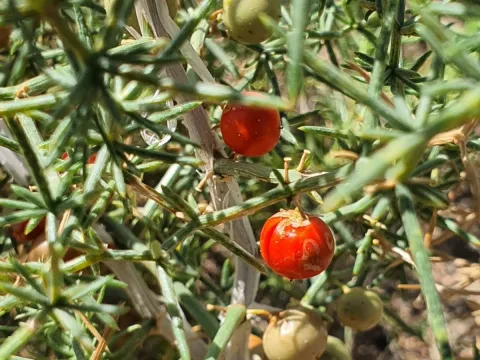
Short-leaved asparagus
Asparagus brachyphyllus
Short-leaved asparagus (Asparagus brachyphyllus) is a perennial species belonging to the Asparagaceae family. It is distinct for its specific physiological adaptation to various environmental conditions, reflecting its evolution in arid regions.
What the section contains
Short-leaved asparagus
The plant thrives in well-drained, loose, and fertile soils. A light texture is essential to ensure that the young shoots can emerge easily through the soil surface without deformation during the early spring growth phase.
Full sun exposure is a mandatory requirement for this crop. Sufficient sunlight ensures high photosynthetic activity, which is crucial for building the carbohydrate reserves in the rootstock necessary for the next year's growth cycle.
Regarding climate, the plant exhibits significant cold hardiness but requires a stable thermal regime during the growing season. Excessive heat accompanied by low humidity can accelerate the lignification of the stems, reducing quality.
Agronomic management involves deep soil preparation prior to planting and consistent monitoring of nutrient levels. Fertilizer applications are typically focused on phosphorus and potassium to strengthen the root system.
Fungal diseases are the primary threat, with root rot being the most common issue in poorly drained fields. Pathogens often thrive when moisture levels remain high for extended periods, causing rapid decay of the underground rhizomes.
Asparagus beetles are the most significant insect pests. They cause direct damage by feeding on foliage and young shoots, which weakens the plant and reduces its overall vigor throughout the summer season.
Stem rust is another notable problem, often appearing as necrotic lesions that reduce the leaf area and photosynthesis efficiency, eventually leading to premature senescence of the asparagus ferns.
Integrated Pest Management (IPM) strategies are highly recommended, including the physical removal of infested shoots and the use of resistant varieties whenever available to minimize chemical dependence.
Maintaining proper distance between plants is essential to improve airflow. Proper ventilation significantly reduces humidity around the stems, acting as a natural barrier against many foliage-attacking fungi.