
Small-flowered agave
Agave parviflora
Description
Growing requirements
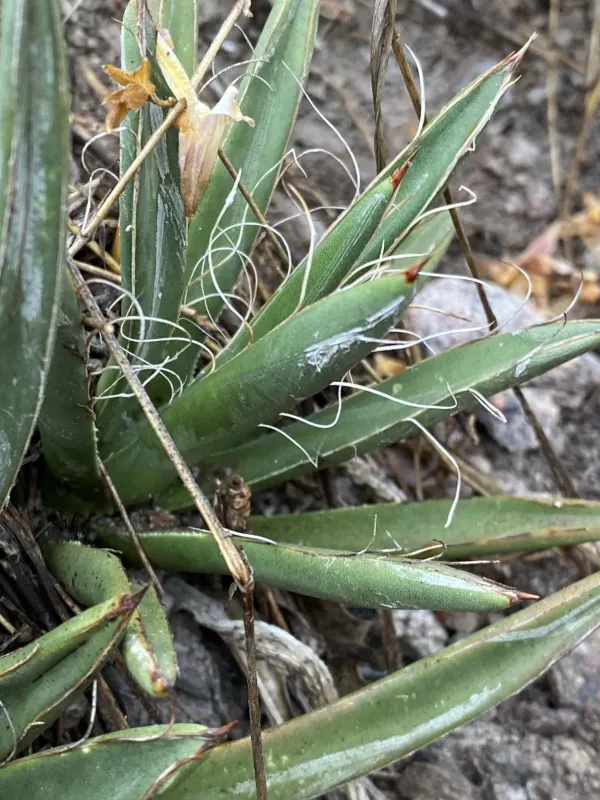
Small-flowered agave (Agave parviflora) is a slow-growing perennial succulent belonging to the Asparagaceae family. Native to the arid desert regions of Arizona and Northern Mexico, it is a highly specialized plant adapted to extreme environments.
This crop thrives in full sun exposure and requires high levels of light to maintain its characteristic compact rosette shape and unique white leaf markings. It is well-suited for xeriscaping in arid climates with well-drained, porous soils.
The soil requirements involve a mixture that ensures rapid drainage, such as sandy, rocky, or gritty substrates. Moisture retention in the soil can be fatal to the root system, so managing the water content is the most critical part of cultivation.
Agave parviflora is frost-hardy to some extent, but protection against prolonged freezing and excessive winter moisture is necessary. The plant remains in a semi-dormant state during winter, requiring very little or no irrigation at all.
In terms of production, the plant is primarily cultivated for its ornamental value. Its slow growth rate makes it a prized specimen in rock gardens and container collections, where it highlights the aesthetic beauty of desert flora.
Main diseases and pests
Root rot caused by overwatering or poor drainage is the primary cause of plant death in Agave parviflora cultivation. It is essential to ensure that the potting medium dries out completely between watering sessions.
Mealybugs are the most common insect pests associated with this species. They hide in the tight axils of the leaves, making them difficult to detect and treat until they have caused significant damage to the plant tissue.
Spider mites can also become a problem, especially in dry, stagnant air conditions. Their feeding activities cause discolored patches on the leaves, which detracts from the plant's overall health and visual appeal.
Fungal infections may occur if leaves remain wet for extended periods, particularly in humid or poorly ventilated greenhouses. Keeping the crown of the plant dry is a crucial preventative measure for commercial growers.
Excessive accumulation of salts from tap water can lead to root damage and leaf tip burn. Using rainwater or purified water for irrigation is recommended to maintain the long-term health and vitality of the agave specimens.