
Sharp-leaved asparagus
Asparagus acutifolius
Description
Growing requirements
Sharp-leaved asparagus (Asparagus acutifolius) is a perennial herbaceous plant belonging to the Asparagaceae family. Unlike common garden asparagus, this species is primarily known as a wild plant native to the Mediterranean basin.
The plant thrives in rocky, stony, and well-drained soils, often found in Mediterranean scrublands (maquis). It is exceptionally drought-tolerant, utilizing a deep root system to survive in arid, high-temperature summer conditions.
It prefers full sun exposure to partial shade, showing remarkable adaptability to varied terrain. It is not typically grown in commercial agricultural fields, as its value is associated with the harvest of wild populations found in nature.
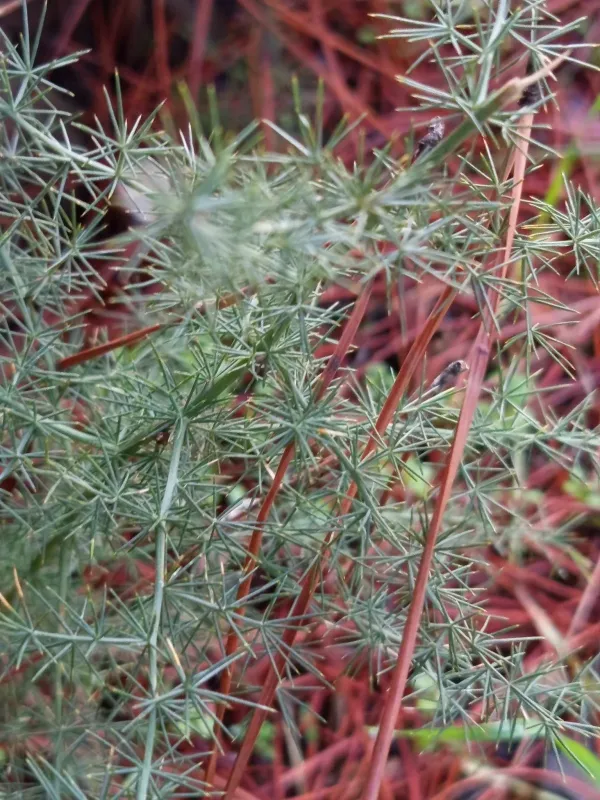
Botanically, it features rigid, evergreen cladodes that act as leaves, ending in sharp points, which give the plant its characteristic name. The stems are woody, and the overall structure is bushy and thorny, providing a defense mechanism.
Ecological requirements include mild winters, which allow the plant to store nutrients, followed by a moist spring that triggers the rapid development of the edible shoots. The plant is considered a significant component of local ecosystems.
Harvesting
Harvesting sharp-leaved asparagus is a traditional practice involving the collection of young, succulent shoots known as turions. These emerge during the spring season and are sought after for their distinct, bitter-sweet flavor profile.
The shoots are harvested by hand when they reach approximately 10 to 15 centimeters in length. Because the plant grows among thorns, harvesters must be careful to select only the tender parts, leaving the tough, woody base of the plant untouched.
The harvest season is brief, lasting only until the plant begins to flower. Once the plant enters the reproductive stage, the shoots become fibrous and lose the delicate texture and flavor that make them a culinary delicacy.
In culinary traditions, these wild shoots are favored for their intense taste, which is significantly more complex than the domesticated variety. They are popular in frittatas, risottos, and as a simple, boiled side dish.
Sustainable harvesting is essential, as the long-term viability of the plant depends on the root system being left intact. Local regulations and traditional practices often guide the gathering process to protect the populations from over-harvesting.