
Soft-leaf yucca
Yucca recurvifolia
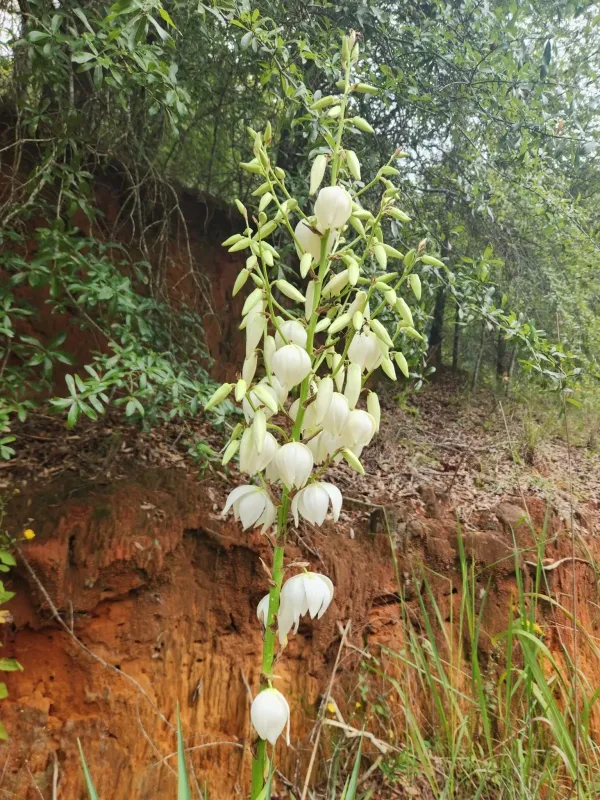
Description
Growing requirements
Soft-leaf yucca (Yucca recurvifolia) is a perennial evergreen shrub belonging to the Asparagaceae family. Native to the coastal regions of the southeastern United States, this plant is naturally adapted to harsh, sandy environments and high levels of sun exposure.
The plant thrives in full sun, which is essential for maintaining its robust structural form and ensuring regular flowering. While it possesses some tolerance for partial shade, restricted sunlight often leads to leaf weakness and decreased overall plant vigor.
Soil requirements are relatively modest, provided the drainage is excellent. It is highly intolerant of waterlogged soils, which quickly lead to root rot. Sandy or gritty soil compositions are ideal for promoting healthy root development and mimicking its natural habitat.
In terms of climate, the species is considered reasonably hardy for a yucca variety. However, it benefits from protection against freezing winds during exceptionally cold winters. In colder zones, gardeners often utilize large containers to allow for overwintering in frost-free areas.
Basic maintenance involves minimal watering once the plant is established. The primary cultural task is pruning dead foliage to maintain aesthetics and prevent fungal pathogens from settling in the decaying organic matter at the base of the plant.
Main diseases and pests
Fungal diseases, specifically leaf spot and root rot, are the most frequent threats to this plant. These issues almost exclusively arise from poor cultural practices, such as excessive moisture or poor air circulation, particularly in humid regions.
Pest pressures are generally low, but scale insects and mealybugs can occasionally infest the foliage, particularly on specimens grown in greenhouses or sheltered areas. Regular monitoring of the leaf bases and undersides helps prevent these minor infestations from causing significant damage.
Harvesting
The primary economic and horticultural application of Yucca recurvifolia is within the ornamental landscape industry. It is prized for its soft, drooping leaves and dramatic, towering flower spikes, which create significant focal points in garden designs.
Flowering usually occurs in late summer or early autumn. The large, creamy-white bell-shaped flowers attract pollinators and add substantial value to xeriscaped gardens and urban landscaping projects where low-maintenance plants are preferred.
Propagating the soft-leaf yucca is commonly performed via division of offsets (pups) or stem cuttings. This practice is standard in commercial nurseries, ensuring uniform growth and maintaining the genetic characteristics desired for large-scale landscaping installations.