
Shaw's Agave
Agave shawii
Description
Growing requirements
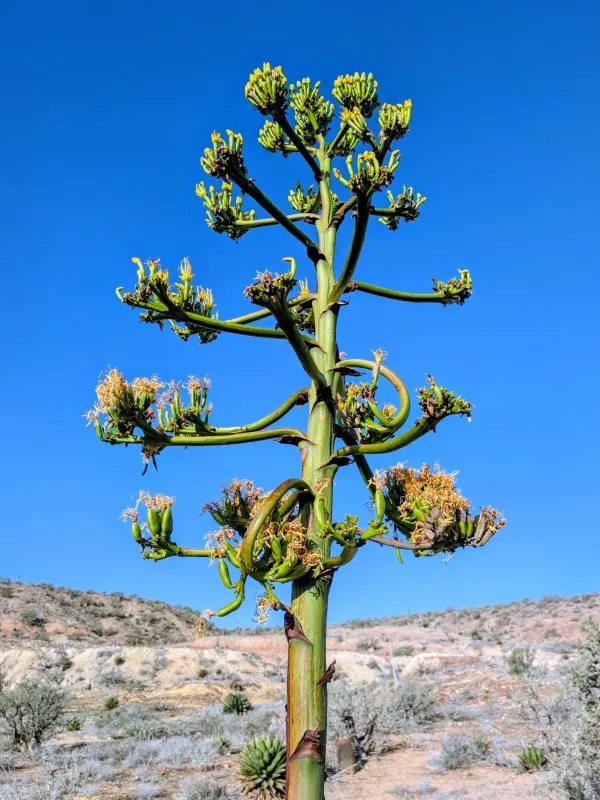
Shaw's Agave (Agave shawii) is a distinctive member of the Asparagaceae family native to the coastal regions of Southern California and Baja California. It is a perennial succulent species specifically adapted to the harsh conditions found in coastal desert environments.
This crop thrives in well-drained sandy or rocky soils, where the prevention of stagnant moisture around the root zone is critical. The plant requires full solar exposure and demonstrates an exceptional tolerance for saline environments, such as coastal cliffs and shorelines.
For optimal development, Agave shawii requires a climate with mild winters, as the species is sensitive to prolonged frost. Ideal temperatures for active growth range from 15 to 25 degrees Celsius, although the plant remains highly resilient to extreme summer heat if minimal moisture is maintained.
Botanically, the plant is characterized by its clumping habit, forming dense clusters of rosettes that can span over a meter in diameter. Its leaves are thick and succulent, covered with a protective waxy bloom, and reinforced with sharp terminal and marginal spines as a defense mechanism.
Agrotechnical management involves minimal intervention, primarily focusing on weed control and ensuring adequate airflow between individual rosettes to prevent fungal infections. Proper spacing during initial planting is essential to maintain the health and vigor of the succulent colony.
Harvesting
The primary horticultural application of Shaw's Agave is ornamental landscaping in arid regions. Its architectural structure makes it a popular choice for xeriscaping projects; however, unlike other agave species, it is not cultivated on a commercial scale for fiber or syrup production.