
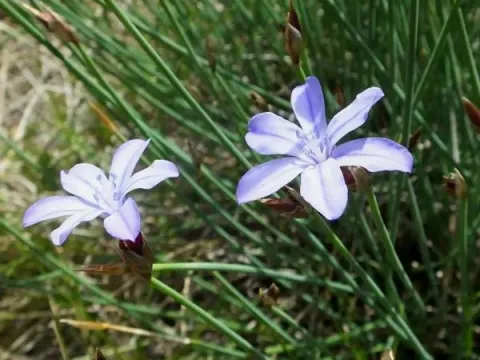
Aphyllanthes
Aphyllanthes
Propagating Aphyllanthes is primarily achieved through seeds, which perform best when sown during the autumn season. This allows for natural stratification, ensuring a higher rate of germination during the following spring.
What the section contains

Aphyllanthes
When sowing, it is critical to use a light, well-draining medium. Seeds should be buried at a shallow depth of approximately 0.5 to 1 cm, ensuring they remain moist but not waterlogged until germination occurs.
For indoor propagation, sowing in early spring within seed trays is recommended. Maintaining a constant temperature of 18–20 degrees Celsius is optimal for healthy seedling development before transplanting outdoors.
Vegetative propagation via division of established clumps can be performed in early spring. This technique allows for faster establishment of the plant, as the root system is already developed and capable of supporting vigorous growth.
Spacing is a vital aspect of the sowing process. To ensure proper air circulation and to prevent the spread of diseases, a minimum distance of 20–30 centimeters between individual plants is strongly recommended.
Aphyllanthes is a plant of Mediterranean origin that thrives in full sun exposure. It requires high light intensity to maintain its structural integrity and prevent the stems from becoming weak or spindly.
The ideal soil for this species is dry, stony, or sandy with excellent drainage properties. The plant is highly intolerant of waterlogged soil, which can lead to rapid root rot and overall plant failure during winter months.
Regarding climate, Aphyllanthes prefers regions with warm summers and mild winters. It is exceptionally drought-tolerant and well-adapted to surviving in arid conditions due to its specialized physiological traits.
The plant performs best in neutral to slightly alkaline soil. Because it is adapted to low-nutrient environments, intensive fertilization is rarely required and can often be counterproductive by encouraging excessive soft growth.
A maintenance-free approach is generally preferred for this crop. Regular weeding around the base of the plant is the most essential activity to reduce competition for light and nutrients, especially in the early stages of growth.
The primary threats to Aphyllanthes are fungal pathogens, specifically those that thrive in stagnant moisture. Root rot is the most common issue, usually resulting from poor soil drainage or excessive irrigation.
Pests are generally not a major concern for this hardy species. However, under conditions of poor ventilation or stress, aphids may colonize the stems. Standard insecticidal soap can be used for localized control.
To prevent disease outbreaks, it is crucial to ensure good spacing between plants. Increasing airflow helps keep the foliage dry and minimizes the environment favorable for fungal development.
Regular monitoring of the plant base is recommended to identify early signs of rot. If localized decay is detected, removing the affected stems and improving drainage conditions can often save the plant.
The overall resilience of Aphyllanthes makes it a low-risk crop in appropriate environments. By prioritizing soil drainage and avoiding over-watering, growers can avoid almost all common health issues associated with this plant.