
Asparagus aphyllus
Asparagus aphyllus
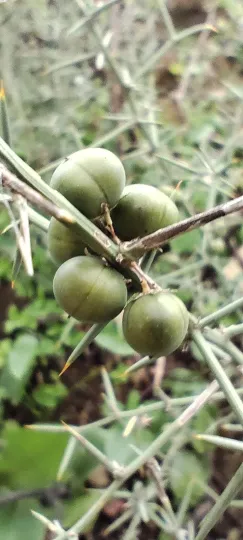
Description
Sowing dates
Asparagus aphyllus is a perennial herb belonging to the Asparagaceae family. In its natural habitat, it propagates mainly through seeds, which often require a period of stratification to improve germination rates.
In cultivation, seeds are sown in early spring once the soil temperature is consistently above 10 degrees Celsius. They should be placed in well-prepared seedbeds at a depth of approximately 2 to 3 centimeters.
Vegetative propagation is achieved by dividing the rhizomes of mature plants. This method is preferred in small-scale farming as it significantly reduces the time required to achieve a harvestable yield.
Growth during the first year is notably slow, requiring consistent management of competing weeds to ensure the young plants are not choked out during their developmental phase.
Optimum planting density usually ranges from 3 to 4 plants per square meter, which provides enough root space for the plant to establish its complex underground system.
Growing requirements
Asparagus aphyllus is a heat-loving plant native to the Mediterranean region, the Middle East, and North Africa. It thrives in open, sunny locations with maximum exposure to sunlight throughout the growing season.
The plant is adapted to various soil types but performs best in well-drained, sandy-loam soils with a neutral or slightly alkaline pH. Proper drainage is essential to prevent root diseases.
Possessing an extensive root system, it exhibits excellent drought tolerance, allowing the plant to sustain growth in arid conditions where other vegetables might fail.
While the plant is somewhat frost-tolerant, it requires protection in regions with extremely harsh winters to prevent the rhizomes from suffering frost damage.
The plant requires a period of dormancy, during which it accumulates nutrients in its rhizomes, followed by a warm, active growing season to produce high-quality shoots.
Yield
Yield capacity develops progressively as the plantation matures. Harvesting should be limited during the first three years to allow the plant to build up its energy reserves.
Stable and productive yields are achieved starting from the fourth or fifth year of the plant's life, depending on the fertility of the soil and water availability.
Although the shoots are naturally thinner than commercial asparagus varieties, they are highly prized for their intense, earthy flavor and nutrient-rich profile.
Regular organic amendments in the early spring promote the emergence of more robust shoots, thereby increasing the overall productivity of the plantation.
Management of the post-harvest period is vital; allowing the fern-like foliage to grow after the harvest season is complete ensures the plant can store sufficient energy for the next year.
Main diseases and pests
Common pests include the asparagus beetle, which feeds on both the tender young shoots and the cladodes, potentially weakening the plant if left uncontrolled.
Fungal issues like rust are prevalent in areas with high humidity or poor air circulation, often resulting in spotted stems and decreased harvest quality.
Root rot is a significant threat when the plant is grown in heavy, waterlogged soils, which highlights the importance of selecting appropriate sites for cultivation.
Integrated pest management strategies, such as crop rotation and the removal of infected debris, are recommended to maintain plant health and soil productivity.
- Asparagus beetle (Crioceris asparagi).
- Asparagus rust (Puccinia asparagi).
- Root rot caused by various fungi.
- Weeds causing nutrient competition.
Harvesting
Harvesting usually takes place in early spring when the young shoots reach a height of about 10 to 20 centimeters and remain tender and crisp.
Shoots are cut using a sharp blade just at or slightly below the soil surface, taking great care to avoid damaging the dormant buds on the crown of the rhizome.
During peak production, harvesting should be performed daily or every other day, as the shoots can quickly become tough and woody under warm weather conditions.
Once harvested, the shoots should be kept in a cool, humid environment to prevent rapid dehydration and maintain their culinary quality.
After the harvest season, no further cutting should occur, allowing the plant to develop its full aerial foliage to replenish the root reserves for the coming year.