
Arkansas yucca
Yucca arkansana
Description
Growing requirements
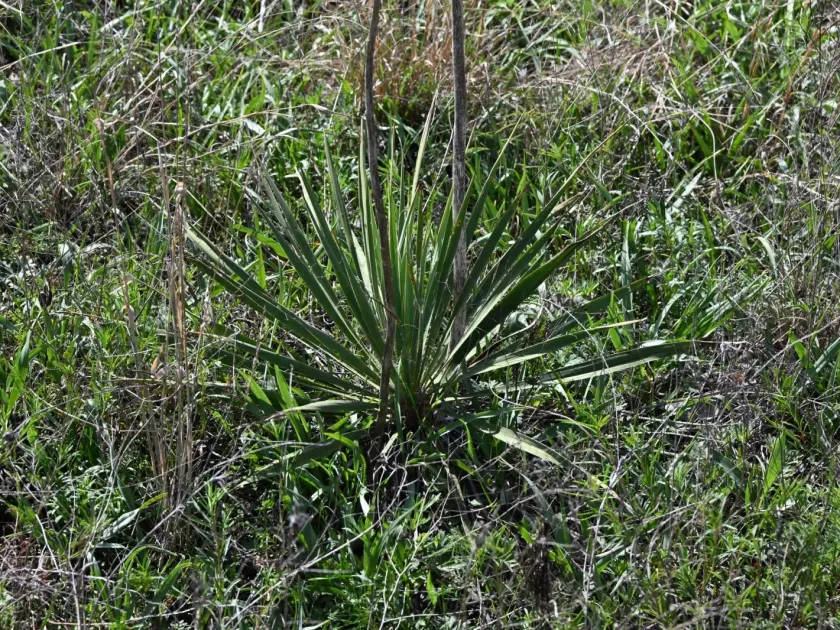
Arkansas yucca is a perennial evergreen plant belonging to the Asparagaceae family. It is a hardy succulent species characterized by a rosette of narrow, rigid leaves and a short stem structure adapted for survival in arid environments.
The native range of this species is centered in the south-central United States, particularly within the states of Arkansas, Texas, and Oklahoma. It naturally inhabits prairies, rocky slopes, and open woodlands, reflecting its evolution in high-sunlight and low-precipitation conditions.
For successful cultivation, the species requires well-draining soil, ideally of a sandy or rocky texture. It does not tolerate waterlogged soil, as constant moisture significantly increases the risk of root rot and total loss of the plant structure.
The plant thrives in full sun exposure, which is essential for its structural integrity and reproductive development. It exhibits excellent tolerance to heat and can endure significant temperature fluctuations, typical of its continental climate of origin.
In terms of agricultural and horticultural use, the Arkansas yucca is primarily valued for xeriscaping and sustainable landscaping. Its low water requirements and minimal maintenance needs make it an ideal candidate for dry garden designs and rock gardens in appropriate hardiness zones.
Main diseases and pests
The primary threat to the Arkansas yucca is fungal infection, specifically root rot, which typically stems from overwatering or inadequate soil drainage. Such conditions destroy the plant's vascular system, leading to its rapid decline.
Pest pressure often comes from sucking insects like spider mites and scale insects. These pests thrive in dry environments and can cause significant damage to the leaf tissue if not managed early through proper identification and treatment.
Leaf spot diseases are also common when the foliage remains wet for extended periods, especially in humid regions. Maintaining good air circulation around the plants is a critical preventive measure against these pathogens.
Management of pests usually involves the application of appropriate miticides and fungicides. A proactive approach includes regular inspections of the leaf base and the heart of the rosette, where insects often hide and lay eggs.
Cultivation success relies heavily on mimicking the plant's natural habitat conditions. By ensuring excellent drainage and avoiding high-humidity stress, the plant remains highly resistant to most diseases and pests found in typical garden environments.