
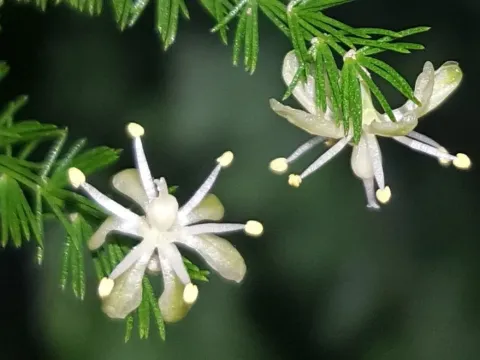
Asparagus
Asparagus L.
Sowing asparagus seeds directly into the open ground is performed in spring once soil temperatures reach a consistent 12–15°C. Late April or early May is generally the best window for most temperate climates.
What the section contains
 Asparagus
 officinalis L.
Asparagus
Asparagus officinalis L.
 Asparagus aethiopicus
 L.
Asparagus aethiopicus
Asparagus aethiopicus L.
 Asparagus cochinchinensis
 (Lour.) Merr.
Asparagus cochinchinensis
Asparagus cochinchinensis (Lour.) Merr.
 Asparagus falcatus
 L.
Asparagus falcatus
Asparagus falcatus L.
 Asparagus madagascariensis
 Baker
Asparagus madagascariensis
Asparagus madagascariensis Baker
 Asparagus retrofractus
 L.
Asparagus retrofractus
Asparagus retrofractus L.
 Common asparagus fern
Asparagus setaceus (Kunth) Jessop
Common asparagus fern
Asparagus setaceus (Kunth) Jessop
Asparagus
Seeds should be soaked in warm water for 3 to 5 days before planting to soften the hard outer coat and significantly improve germination rates. Most commercial growers prefer starting seeds in containers.
When transplanting seedlings to their permanent location, proper spacing is crucial. Rows should be spaced 70–90 cm apart, with individual plants placed 30–40 cm apart within the row.
Seeds should be sown at a depth of 2–3 cm. During the first year, the plant focuses on developing its crown and deep root system, so weed control is essential for establishing a healthy crop.
Autumn care during the first year involves applying a thick layer of mulch, such as compost or straw, to protect the developing crowns from extreme winter temperatures and frost heaves.
Asparagus (Asparagus L.) belongs to the Asparagaceae family and is a perennial plant known for its longevity. It requires a sunny location with excellent air circulation to thrive.
The ideal soil for asparagus is light, well-drained, and sandy loam with a neutral pH. Avoid heavy clay soils, as they retain too much moisture, which can lead to crown rot.
The plant requires consistent moisture, especially during the peak growing season. However, standing water is fatal, so the planting site must have good drainage to prevent root suffocation.
Fertilization is key to high productivity. A balanced application of compost or organic fertilizers in the spring helps stimulate new spear growth, while potassium helps with winter hardening.
Regular cultivation of the topsoil in the rows is recommended to improve aeration and manage weed growth. This ensures that nutrients and oxygen reach the roots effectively.
Yielding in asparagus is a gradual process. No harvest should be taken during the first two years of the plant's life, as the energy must be channeled into root establishment.
A light harvest can begin in the third year, limited to about two weeks. By the fourth year, the plants are usually established enough to sustain a full harvest season.
A healthy, well-managed asparagus bed can produce high-quality spears for 15 to 20 years. Yields typically peak between the sixth and tenth years of the plant's maturity.
Typical yields vary depending on the variety and management practices, ranging from 3 to 6 tons per hectare under optimal conditions. Quality is measured by spear thickness and tenderness.
It is vital to stop harvesting in early summer to allow the ferns to grow and photosynthesize. This energy is stored in the crown for the following season's production.
Asparagus rust is a common fungal disease that affects the ferns, causing orange pustules. Proper spacing and airflow are the best preventative measures against this pathogen.
Fusarium root rot and crown rot are serious threats caused by poor drainage and excessive soil moisture. Once a plant is infected, it should be removed and destroyed to prevent spread.
The asparagus beetle is a primary insect pest that feeds on both foliage and young spears. Integrated pest management, including manual removal and biological controls, is effective.
Pests such as cutworms or voles can damage the subterranean crowns during the dormant season, necessitating vigilance and the use of protective barriers if necessary.
Maintaining a clean field by removing dead plant debris in the late autumn helps reduce the population of overwintering pests and prevents the spread of soil-borne diseases.
Harvesting should be done daily during the peak season, preferably early in the morning. This timing ensures that the spears remain crisp, fresh, and at their best quality.
For white asparagus, spears must be cut as soon as the soil begins to crack over the spear tip. This keeps them away from light and ensures the characteristic white color.
Green asparagus is harvested when spears reach 15–20 cm in height but before the bracts at the tip begin to open. Once the tip opens, the spear loses quality.
A specialized long, slender harvesting knife is used to cut the spear about 2–3 cm below the soil surface, taking great care not to damage neighboring spears or the crown buds.
After harvest, spears should be immediately cooled to near-freezing temperatures to preserve their sugar content and prevent the fibers from becoming tough and woody.