
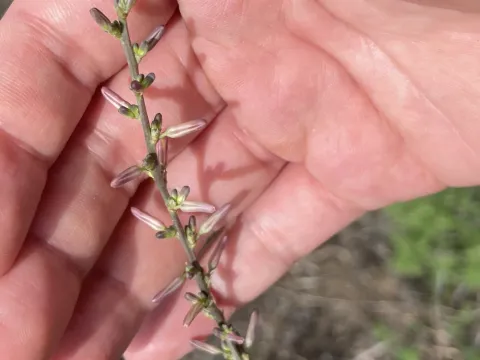
Anemarrhena asphodeloides
Anemarrhena Bunge
Anemarrhena asphodeloides, commonly known as Zhi Mu, is a perennial herb belonging to the Asparagaceae family. It is a highly valued medicinal plant, primarily cultivated for its rhizomes which contain significant pharmacologically active saponins.
What the section contains

Anemarrhena asphodeloides
Planting is typically done in the spring once the soil temperature consistently reaches 10–12°C. In regions with milder climates, late autumn sowing is an option, allowing for natural seed stratification over the winter, which leads to more vigorous germination in the spring.
The crop is grown in rows spaced 30–40 cm apart to provide ample room for the rhizomes to develop. Proper spacing is crucial to prevent resource competition and to ensure that each plant can develop a healthy root system within the 2–3 year growth cycle.
Seeds should be sown at a shallow depth of 1–2 cm. Excessive burial can delay emergence and significantly reduce the overall stand density of the field, which negatively impacts the final yield of the medicinal harvest.
Once seedlings have reached the 2–3 leaf stage, thinning is necessary to achieve a final density of plants about 15–20 cm apart. This management practice is essential to maximize the size and quality of the harvested rhizomes.
Anemarrhena asphodeloides thrives in temperate climates and is known for its cold hardiness. Native to the grassy slopes of East Asia, it has adapted to sunny, open habitats and requires similar conditions for successful commercial production.
The plant prefers well-drained, sandy loam soils with a neutral or slightly acidic pH. Heavy, waterlogged soils must be avoided, as the root system is highly susceptible to rot when exposed to excessive moisture for prolonged periods.
As a light-demanding species, it should be placed in areas with full sun exposure. In shaded environments, the growth rate is stunted, and the accumulation of secondary metabolites in the roots is often insufficient for high-quality medicinal output.
While the plant shows moderate drought tolerance, adequate moisture is critical during the active growing season. Supplemental irrigation may be required in arid regions to ensure consistent growth and prevent stress that could impact root development.
Fertilization should focus on balanced inputs, specifically favoring phosphorus and potassium to promote root health and saponin concentration. Nitrogen should be applied conservatively to avoid excessive vegetative growth at the expense of root density.
The primary economic output of Anemarrhena asphodeloides is its rhizome. Known in traditional medicine as Zhi Mu, the dried rhizome is widely used for its antipyretic, anti-inflammatory, and antimicrobial properties in various health formulations.
The standard cultivation period for harvest ranges from 2 to 3 years. Harvesting before this window is usually discouraged, as the rhizomes will not have accumulated a sufficient concentration of active therapeutic compounds to meet industrial standards.
Yield capacity is highly dependent on soil quality, field management, and the local climate. Under optimal conditions, a well-maintained plantation can produce a substantial volume of raw material that is highly sought after by pharmaceutical processors.
Following excavation, the rhizomes must be cleaned of soil and debris. Primary processing, including washing and sorting, is vital to ensure the final product meets the high purity standards expected in the herbal medicine market.
The steady demand for natural herbal ingredients ensures that Anemarrhena asphodeloides remains a profitable niche crop. Farmers who specialize in post-harvest drying and quality control can achieve premium pricing for their output.
The most significant threat to Anemarrhena asphodeloides is root rot, typically caused by fungal pathogens in wet, poorly drained soil. Maintaining proper soil moisture and ensuring excellent drainage are the primary preventative measures.
Soil-dwelling pests, such as wireworms, can damage the developing rhizomes. Integrated pest management strategies, including crop rotation and soil preparation, are effective in reducing the pressure from these soil-borne pests.
Leaf spot diseases may occur in high humidity or crowded field conditions. These diseases are usually managed by ensuring adequate airflow through proper spacing and, if necessary, applying mild organic fungicides approved for medicinal crops.
Crop rotation is mandatory; planting on the same site for consecutive years often leads to a buildup of soil pathogens that can decimate the root harvest. A rotation interval of at least 3–4 years is recommended to break pest cycles.
Regular field inspection is required to identify any diseased plants early. Prompt removal of infected individuals helps prevent the spread of localized infections throughout the entire field, protecting the overall yield investment.
Harvesting is performed in the autumn after the aerial portions of the plants have yellowed and died back. This timing indicates that the plant has translocated most of its metabolic energy into the rhizomes, maximizing their medicinal potency.
Mechanical harvesting equipment is often used to lift the rhizomes from the soil while minimizing breakage. Careful handling is necessary, as high-quality, intact rhizomes command higher market prices than fragmented material.
Once harvested, the roots are washed to remove soil. Any lateral roots or damaged sections are trimmed to prepare the material for drying. Consistent quality in sorting and cleaning is a hallmark of professional-grade raw material.
Drying is a critical phase, performed in well-ventilated areas or specialized ovens at controlled temperatures. Avoiding high heat is essential to prevent the degradation of heat-sensitive compounds that define the medicinal value of the plant.
Final storage should be in a cool, dry, and dark location to preserve the efficacy of the phytochemicals. Properly dried rhizomes can be stored for extended periods if they are kept free from moisture and potential storage pests.