
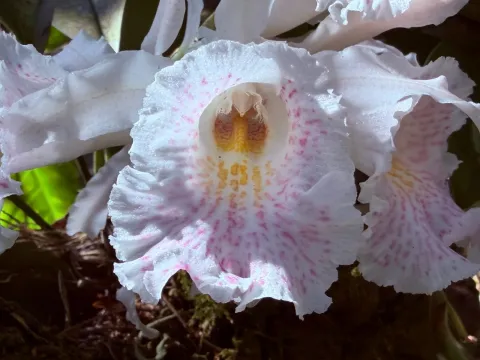
Trichopilia
Trichopilia
Trichopilia is a genus of epiphytic orchids belonging to the Orchidaceae family, native to tropical forests ranging from Mexico to South America. In their natural habitat, they inhabit tree branches, thriving in humid, shaded environments where they receive filtered sunlight and constant air movement.
What the section contains


Trichopilia
Agrotechnical management of Trichopilia requires a specific climate setup. Most species are cool-to-intermediate growers that strictly require a distinct day-night temperature fluctuation to induce healthy growth and consistent flowering cycles during their active growing season.
Cultivation should take place in highly porous, free-draining media such as fir bark chunks, charcoal, and sphagnum moss. Many growers prefer mounting these plants on cork slabs, which mimics their natural epiphytic growth pattern and ensures the root system remains well-aerated at all times.
Watering requirements are delicate; the substrate should stay moist but never waterlogged. It is crucial to maintain high relative humidity levels, ideally between 60% and 80%, to prevent the foliage from shriveling and to maintain the overall vigor of the plant during developmental stages.
The primary use of Trichopilia is within the specialty floriculture sector and orchid hobbyist collections. Due to their striking, often large, and fragrant flowers featuring a prominent, tubular lip, these orchids are prized for their aesthetic value and are considered premium specimens in commercial nurseries.
Pest management is a critical aspect of Trichopilia production. Common pests include spider mites and scale insects, which frequently infest plants kept in low-humidity environments. Integrated pest management, including regular inspection and the use of targeted acaricides, is necessary to keep populations in check.
Fungal and bacterial rots are the most serious threats, usually resulting from poor air circulation and excessive moisture retention in the root zone. Proper hygiene, sanitation of potting equipment, and maintaining an optimal microclimate are essential strategies to minimize the incidence of these damaging pathogens.