
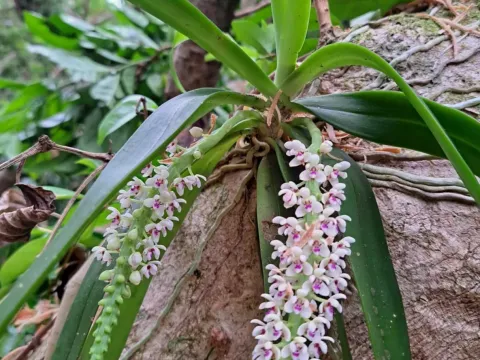
Tuberolabium
Tuberolabium
Tuberolabium is a genus of epiphytic orchids belonging to the Orchidaceae family. These plants are native to the tropical forests of Southeast Asia, specifically regions like the Philippines, Indonesia, and parts of the Pacific islands.
What the section contains


Tuberolabium
To cultivate these orchids successfully, one must replicate their natural tropical environment. They require high levels of atmospheric humidity, typically between 70% and 80%, alongside constant air movement to mimic the breezes in their native canopy habitat.
The temperature requirements are categorized as warm to intermediate, with daytime temperatures preferred around 23–27°C. A consistent drop in night temperature by approximately 5–8°C is essential for the healthy physiological cycle of the plant and for stimulating flowering.
Cultivation should focus on ensuring the root system receives sufficient aeration. The most effective substrate consists of high-quality pine bark chips mixed with charcoal and perlite. Growing them mounted on cork or tree fern slabs is often superior for long-term health.
Light intensity should be bright but filtered. Direct sunlight during the middle of the day will likely scorch the leaves and permanently damage the plant. Using a shade cloth or placing the plant in a position with diffused light is recommended for optimal growth.
Tuberolabium is susceptible to common orchid pests such as spider mites, aphids, and scale insects. These pests often congregate on the undersides of leaves or deep within the leaf axils, making early detection and treatment with appropriate pesticides critical.
Root and crown rot represent the most significant threats to the survival of this culture. These issues are almost exclusively caused by overwatering or the use of a degraded, water-logged substrate that prevents roots from breathing and drying out.
Fungal leaf spots are common in environments with poor ventilation or high humidity levels coupled with stagnant air. To prevent these infections, growers must ensure that leaves dry quickly after watering or misting procedures.
Viral infections can affect the health of the plant, often manifesting as stunted growth, mottled leaves, or distorted flower spikes. Unfortunately, these viruses are systemic, and affected plants should be destroyed to prevent the spread to other specimens.
Effective disease management relies on preventative practices. Maintaining sanitary conditions, using sterile tools when pruning, and avoiding excessive moisture in the plant's core area are the best defenses against both pathogenic and opportunistic organisms.