
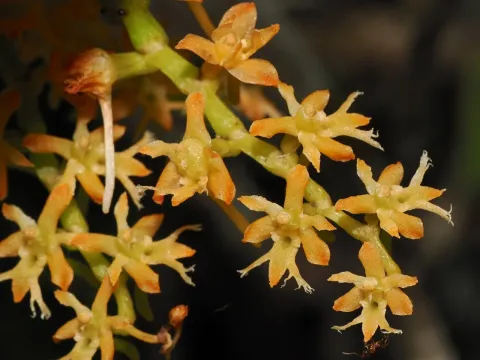
Tridactyle
Tridactyle
Tridactyle is a genus of epiphytic orchids belonging to the family Orchidaceae. These plants are native to the tropical regions of Africa, where they typically grow on the branches of trees in humid, forested environments, adapting to the canopy life.
What the section contains

Tridactyle
The botanical characteristics of this genus are defined by their unique flower structure, often featuring a lip with three distinct lobes or appendages. They possess evergreen leaves arranged in two rows along the stem, allowing them to capture diffuse sunlight in their native forest habitats.
From an agricultural standpoint, Tridactyle is not a staple crop but is highly valued in the horticultural industry as a specialized ornamental plant. They are primarily cultivated by collectors and botanical gardens that specialize in preserving and displaying unique orchid species.
Propagation of these orchids is mainly performed through vegetative division of mature clumps or through specialized laboratory tissue culture techniques. The latter is essential for large-scale production, as the tiny seeds require a symbiotic relationship with specific fungi to germinate.
Maintaining a collection of Tridactyle is a test of horticultural skill, requiring an understanding of the plant's natural ecological niche. They are prized for their subtle beauty and the architectural interest they bring to an indoor tropical plant collection.
Tridactyle orchids require a stable temperature regime, typically between 18 and 28 degrees Celsius, to mirror their tropical origins. Avoiding drastic daily temperature fluctuations is essential to prevent physiological stress and stunted growth.
Maintaining high relative humidity, ideally between 60% and 80%, is crucial for the health of their aerial roots. Frequent misting or the use of automated fogging systems in a greenhouse setting can effectively maintain the necessary moisture levels.
Lighting should be bright but indirect to protect the foliage from scorching. Providing shade during the brightest hours of the day, using cloth or natural forest cover, is standard practice to prevent leaf burn and damage to the plant's delicate tissues.
The cultivation medium must be highly porous to ensure rapid drainage and air circulation around the roots. Common mixtures involve pine bark, perlite, and charcoal, which prevent waterlogging and reduce the risk of root suffocation.
Watering should be done with filtered or soft water to avoid the accumulation of mineral salts. It is critical to ensure that the medium dries slightly between waterings to foster healthy root respiration and prevent rot-inducing conditions.
Fungal pathogens are the primary concern for Tridactyle, especially when air circulation is inadequate. Pathogens like Phytophthora or Rhizoctonia can spread rapidly in stagnant, humid conditions, targeting both roots and foliage.
Pests such as mealybugs and scale insects represent a significant threat to these plants. They hide in leaf axils, making them difficult to detect early, and can cause significant damage by depleting the plant's energy reserves.
Spider mites can also cause issues in dryer environments, resulting in stippled foliage and reduced vitality. Regular monitoring and maintaining proper humidity levels serve as the best preventative strategies against these micro-pests.
Bacterial soft rot can occur if water remains trapped in the center of the growth point after watering. Proper ventilation and immediate removal of any diseased tissue with sterilized tools are essential measures for controlling the spread of infections.
Over-fertilization can weaken the plant's cell walls, making it more susceptible to insect attacks and diseases. A balanced, dilute orchid-specific fertilizer applied only during the active growing season is recommended to keep the plant resilient.