
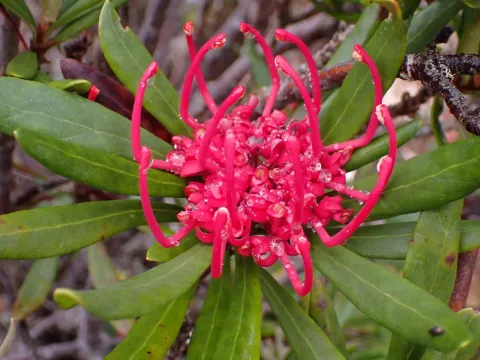
Telopea
Telopea
Propagation of Telopea for commercial or ornamental purposes is primarily achieved through seeds or cuttings. Seeds should be sown in spring into a light, well-draining substrate with low acidity, maintaining a stable temperature around 20–22°C.
What the section contains

Telopea
Cuttings are considered a more preferred method to preserve the specific varietal characteristics of the plant. Semi-hardwood cuttings are taken in late summer, treated with rooting hormones, and placed in conditions of high humidity with moderate bottom heat.
The germination and rooting process is relatively slow and requires strict control over moisture levels to prevent water stagnation in the growing medium. It is essential to use sterile soils to avoid fungal infections during the early stages of vegetation.
Young seedlings require a gradual transition to outdoor or greenhouse conditions. Transplanting to a permanent location should only be carried out once the root system is sufficiently developed to support the plant's nutrient uptake.
The crop belongs to the Proteaceae family and possesses specialized roots (proteoid roots) that are extremely sensitive to phosphorus excess; therefore, standard fertilizers with high phosphorus content should be avoided during both sowing and maintenance.
Telopea is an evergreen shrub with a natural habitat limited to the southeastern regions of Australia. The plant requires a specific microclimate with mild winters, as even light frosts can be detrimental to young shoots.
Soil requirements for the crop include excellent aeration and drainage. Sandy or loamy soils with an acidic or slightly acidic pH are preferred, preventing waterlogging at the roots, which is a critical risk factor for the species.
The plant thrives in sunny locations protected from strong winds; however, in regions with hot summers, light shading during midday hours is advisable. It is important to maintain moderate air humidity while avoiding direct water spray on the large inflorescences during their development.
Moisture requirements involve regular but moderate watering during the active growing season. Excess watering during winter, when the plant is in a state of relative dormancy, almost inevitably leads to root rot.
In cold climate regions, Telopea is grown as a greenhouse crop or in containers, which allows for precise control over soil composition and protects the plant from extreme weather conditions to ensure stable flowering.
Commercial use of Telopea is focused on producing high-quality cut flowers for the floriculture industry. The inflorescences are highly decorative and possess exceptional vase life after cutting, making them sought-after in the exotic plant market.
Yield depends on the age of the plant and the agronomic management practices. Mature specimens, when pruned correctly, can produce several dozen large flower spikes per growing season, ensuring a consistent supply of marketable product.
Regular pruning is a key factor in maintaining high yields. It is performed immediately after flowering, removing old flower stems to stimulate the growth of new shoots, which will form the buds for the following year.
The economic viability of Telopea cultivation is directly linked to the long-lasting nature of the cut flowers. When stored in cold rooms at optimal temperatures, the product maintains its market quality for up to 2–3 weeks, facilitating logistics.
Telopea plantations require intensive care, but the high market price of each flower spike compensates for maintenance costs. Success relies on achieving optimal planting density to maximize the greenhouse area efficiency.
The primary threat to Telopea health is root rot caused by pathogens of the genus Phytophthora. These fungi become active under conditions of excessive soil moisture and poor drainage, rapidly damaging the shrub's vascular system.
Among pests, the greatest danger is posed by sap-sucking insects such as aphids and scale insects. They infest young leaves and flower stalks, extracting cell sap and significantly reducing the marketable quality of the cut flowers.
In greenhouse conditions, spider mite infestations are possible, especially when air humidity is low and temperatures are high. Regular inspection of the underside of leaves allows for the timely detection of infection hotspots.
For pest and disease management, an integrated approach is recommended, including the use of biological agents and timely fungicide applications. Preventive measures are always more effective than treating infected specimens.
Monitoring the overall balance of nutrients is crucial, as a deficiency in certain micronutrients makes Telopea more susceptible to secondary infections. Crop rotation in greenhouses and sterilization of equipment are mandatory sanitation protocols for any plantation.