
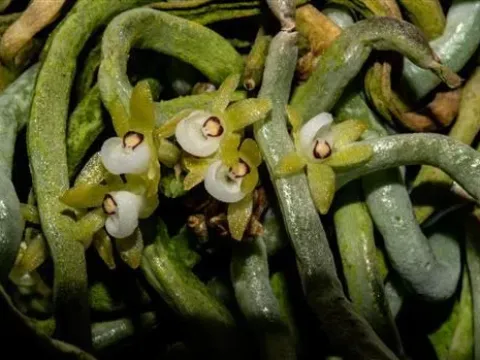
Taeniophyllum
Taeniophyllum
Taeniophyllum is a remarkable genus of epiphytic plants belonging to the Orchidaceae family. The most prominent characteristic of this crop is its lack of traditional leaves, as the plant performs photosynthesis exclusively through its flattened, green, root-like structures.
What the section contains

Taeniophyllum
Originating from the tropical forests of Southeast Asia, Australia, and the Pacific Islands, these plants have adapted to live high on tree branches. In their natural habitat, they rely entirely on atmospheric humidity and rainfall to acquire necessary moisture and nutrients.
For successful cultivation, growers must maintain high levels of humidity, ideally between 70 and 80 percent, to mimic the tropical environment. Consistent temperatures ranging from 22 to 28 degrees Celsius are essential for the metabolic activity of the plant.
Cultivation should exclusively occur on mounts, such as cork bark or tree fern slabs, to facilitate optimal airflow around the roots. Planting these orchids in any traditional soil substrate will almost certainly result in root rot and plant death.
The plant requires bright, filtered light to sustain the photosynthetic processes in its roots. Adequate air circulation is paramount, as stagnant air often leads to the development of pathogenic fungi and prevents the roots from drying sufficiently after watering.
The primary threats to Taeniophyllum are fungal infections, which flourish in stagnant, overly humid conditions. Root rot is the most common and dangerous issue, as the roots are the sole organ responsible for the plant's survival and energy production.
Pests such as spider mites and mealybugs can pose a serious danger by feeding on the delicate green roots. An infestation not only causes physical damage but also stresses the plant, making it highly susceptible to secondary bacterial and fungal pathogens.
Prevention focuses on maintaining a strict watering regimen and ensuring the roots dry out quickly between irrigation sessions. If pests are detected, gentle manual removal combined with appropriate systemic insecticides is recommended to protect the plant.
Regular monitoring of the root system is critical for early detection of issues before they become fatal. Maintaining cleanliness in the growing area, especially regarding the mounting medium, helps reduce the risk of mold and bacterial accumulation.
Proper ventilation remains the most effective defense against the majority of environmental pathogens. Providing a stable and clean habitat significantly increases the lifespan and vigor of these exotic leafless orchids in cultivation.