
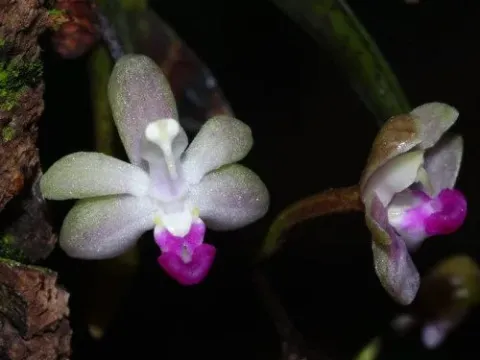
Stereochilus
Stereochilus
Stereochilus is a genus of epiphytic plants belonging to the Orchidaceae family. Native to the tropical regions of Southeast Asia, these orchids thrive in high-humidity environments, typically attaching themselves to tree trunks and branches in forest canopies.
What the section contains


Stereochilus
The plant exhibits a monopodial growth habit characterized by short stems and firm, leathery leaves. Its root system is specifically adapted to absorb moisture from the air, making these plants highly sensitive to atmospheric conditions and humidity fluctuations.
To successfully cultivate Stereochilus, a consistent temperature range between 20°C and 28°C is required. Stability in the growing environment is essential to prevent physiological stress, which often leads to poor growth or the failure of the plant to flower.
The potting medium must provide excellent aeration, as roots are prone to rot if suffocated. A mixture of pine bark, charcoal, and sphagnum moss is commonly used by professional growers to mimic the natural conditions found in their original habitat.
Indirect light is vital for the survival of the plant, as direct exposure to harsh sun rays can scorch the foliage. Proper ventilation in the growing area is equally important, as it facilitates gas exchange and prevents the stagnation of air around the roots.
Fungal pathogens represent the primary threat to this genus, particularly when excess water remains in leaf axils for extended periods. Controlling moisture levels is the most effective preventative measure against root and stem rot diseases.
Pest infestations such as spider mites, scale insects, and mealybugs can severely impact the plant's health. Growers should maintain a routine inspection schedule and utilize appropriate horticultural soaps or systemic pesticides to manage pest populations effectively.