
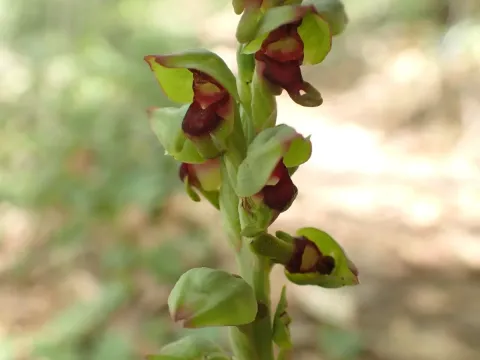
Steveniella
Steveniella
Steveniella is a monotypic genus belonging to the Orchid family (Orchidaceae). The only species, Steveniella satyrioides, is a fascinating and rare terrestrial orchid that is highly valued by botanists and conservationists alike.
What the section contains

Steveniella
The native range of this plant includes the Caucasus region, Crimea, and parts of Iran and Turkey. It typically grows in mountainous areas, preferring rocky slopes, limestone formations, and light, semi-shaded forest edges.
The biological life cycle of this plant is characterized by a dormancy period, during which it relies on its subterranean tubers for energy storage. As an ephemeroid, it completes its growth cycle during the favorable spring season.
The plant has very specific environmental requirements, demanding well-drained, porous soils with a neutral or alkaline pH. It cannot survive in soils that are prone to waterlogging or heavy compaction.
There is no commercial agricultural use for Steveniella. It is protected by law in many countries, and its cultivation is almost exclusively restricted to specialized botanical collections focused on rare species preservation.
The primary threat to the stability of Steveniella populations is habitat fragmentation due to agricultural expansion and human development in mountainous regions.
Invasive grazing practices pose a significant risk, as trampling by livestock damages the delicate surface soil layer where the orchid's tubers reside.
Fungal infections can develop if the soil water balance is disrupted, leading to the rapid decay of the plant's root system during the dormant stage.
Various insects, including certain beetle species and snails, are known to feed on the reproductive parts of the plant, hindering its natural propagation.
Climate change, manifesting as shifts in precipitation patterns, directly threatens the survival of these orchids, as they are highly sensitive to sudden changes in humidity and temperature.