
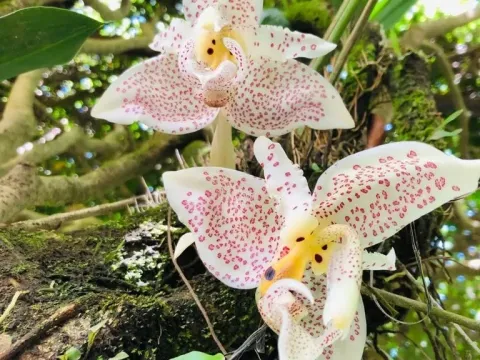
Stanhopea
Stanhopea
Stanhopea is a fascinating genus of epiphytic orchids belonging to the Orchidaceae family, native to the tropical forests of Central and South America. These orchids are known for their unique sympodial growth habit, featuring large ovoid pseudobulbs and broad, pleated leaves that require specific environmental care.
What the section contains
 Stanhopea candida
Stanhopea candida
Stanhopea candida
 Stanhopea grandiflora
Stanhopea grandiflora
Stanhopea grandiflora
 Stanhopea hernandezii
Stanhopea hernandezii
Stanhopea hernandezii
 Stanhopea insignis
Stanhopea insignis
Stanhopea insignis
 Stanhopea jenischiana
Stanhopea jenischiana
Stanhopea jenischiana
 Stanhopea maculosa
Stanhopea maculosa
Stanhopea maculosa
 Stanhopea shuttleworthii
Stanhopea shuttleworthii
Stanhopea shuttleworthii
 Stanhopea tigrina
Stanhopea tigrina
Stanhopea tigrina
Stanhopea
The primary horticultural requirement for Stanhopea is the use of hanging baskets. Because the floral spikes emerge downwards from the base of the plant, they must be grown in slatted baskets or containers with open mesh to allow the inflorescence to grow through the bottom without obstruction.
An ideal substrate for these plants must be highly porous and well-draining, typically consisting of large-grade pine bark, charcoal, and sphagnum moss. Ensuring proper aeration at the roots is vital to prevent root rot and promote healthy vegetative growth throughout the season.
In terms of climate, Stanhopea plants thrive in high humidity conditions, ideally ranging from 70% to 90%, and prefer moderate, indirect light. They are sensitive to direct midday sun, which can easily scorch their foliage, and require good air circulation to mimic their natural tropical habitat.
The economic and aesthetic value of the genus lies in its popularity among orchid enthusiasts and collectors. The plants are prized for their spectacular, complex flowers and intense, often sweet fragrances that play a crucial role in attracting specific pollinators in nature.
The most common issues affecting Stanhopea include fungal and bacterial rots, which often occur due to poor ventilation and excessive moisture trapped in the root zone.
Scale insects and mealybugs are the most frequent pests, often hiding under the papery sheaths of the pseudobulbs, making them difficult to detect early.
Spider mites are another major threat, particularly in environments where humidity levels are not maintained during the dormant or winter periods.
Preventative care involves regular inspections of the plant's undersides and the base of the pseudobulbs, combined with maintaining stable, humid conditions.
In case of severe infestations or disease outbreaks, growers should utilize specific acaricides or fungicides and prune away affected plant parts to save the specimen.