
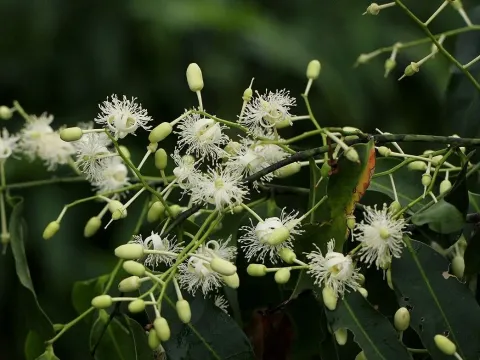
Scytopetalum
Scytopetalum
Scytopetalum is a genus of plants belonging to the family Lecythidaceae. These trees are native to the tropical rainforests of West and Central Africa, thriving in humid environments with high precipitation levels.
What the section contains

Scytopetalum
The climate requirements for this culture are strictly tropical. It needs high year-round temperatures, typically between 24°C and 30°C, and cannot tolerate exposure to cold winds or low-temperature shocks during its vegetative development.
Consistent rainfall throughout the year is vital for the survival of this species. In areas where dry seasons are prominent, artificial irrigation systems are necessary to maintain adequate soil moisture levels.
Soils should be rich in organic matter and possess excellent drainage capabilities. The species is highly intolerant to waterlogging, as the root system is prone to fungal pathogens in poorly aerated environments.
Optimal light conditions for juvenile Scytopetalum plants involve semi-shade or filtered sunlight. As the tree matures, its canopy develops, allowing it to compete for light within the forest structure.
The primary economic output of Scytopetalum is its high-quality timber. It is utilized by local communities for construction purposes, carving, and the production of small-scale wooden items.
Harvesting usually involves selective logging techniques. Because the tree exhibits slow growth rates compared to pioneer species, sustainable management practices are essential to prevent over-exploitation.
The wood is valued for its durability and resistance to various biotic pressures. These characteristics make it a sought-after material for specialized applications in local craft industries.
- Maintenance of appropriate spacing during plantation establishment.
- Regular inspection of the bark for signs of wood-boring insects.
- Selective thinning to allow canopy development for the best specimens.
Sustainable harvesting also takes into account the phenology of the trees, ensuring that seed dispersal cycles are respected to support natural regeneration within the plantation or forest area.