
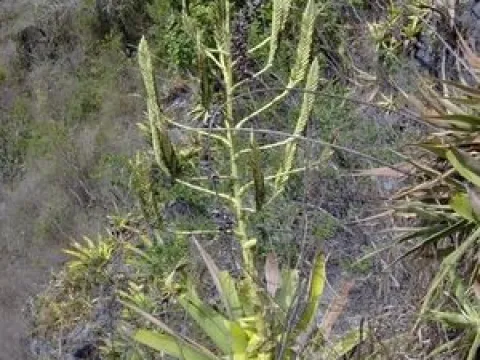
Pseudalcantarea
Pseudalcantarea
Pseudalcantarea is a genus of perennial epiphytic plants belonging to the Bromeliaceae family. Native to the tropical regions of the Americas, these plants have evolved to survive in high-canopy forest environments where they access moisture and nutrients directly from the air and atmospheric debris.
What the section contains


Pseudalcantarea
The botanical structure of the plant is defined by a central rosette of tough, leathery leaves that form a tank-like cavity. This structure acts as a biological reservoir, capturing rainwater and organic matter which the plant absorbs through specialized scales on the leaf surface known as trichomes.
In terms of climate requirements, Pseudalcantarea demands high ambient humidity, ideally above 65%. It is highly sensitive to cold, requiring consistent tropical temperatures between +20°C and +28°C. Cold drafts or temperature drops below +15°C can lead to tissue damage and plant decline.
Cultivation requires a specific substrate that mimics the epiphytic habitat. A typical mix consists of coarse pine bark, charcoal, perlite, and a small amount of sphagnum moss. The plant should never be planted in dense garden soil as it lacks the aeration needed by the root system.
Light intensity is critical for the health and coloration of the foliage. While these plants prefer bright, indirect light, they can tolerate some direct morning sun, but intense midday exposure must be mitigated with shade cloth to prevent leaf bleaching and dehydration.
Root rot caused by overwatering is the primary threat to the longevity of the plant. Since Pseudalcantarea is an epiphyte, its roots are intended to breathe; therefore, the substrate must be allowed to dry slightly between watering cycles to prevent fungal colonisation.
Scale insects are a persistent pest for this species. Their hard, armored bodies allow them to hide in the tight crevices of the leaf rosette, where they are protected from manual cleaning and surface-level chemical treatments.
Mealybugs are another major concern, often congregating at the base of the leaves. Their feeding habits cause chlorosis, where the leaves lose their vibrant color and eventually wilt due to the loss of cell sap.
Fungal diseases, specifically black rot, can occur if the central tank of the plant remains stagnant for too long with poor quality water. Proper hygiene, such as flushing the tank with fresh water periodically, is essential for disease prevention.
To maintain plant health, it is recommended to conduct monthly visual inspections of the leaf axils. If pest populations are detected, systematic insecticides should be applied carefully, ensuring the solution reaches the hidden parts of the rosette.